Written in 2023
A few words before we begin
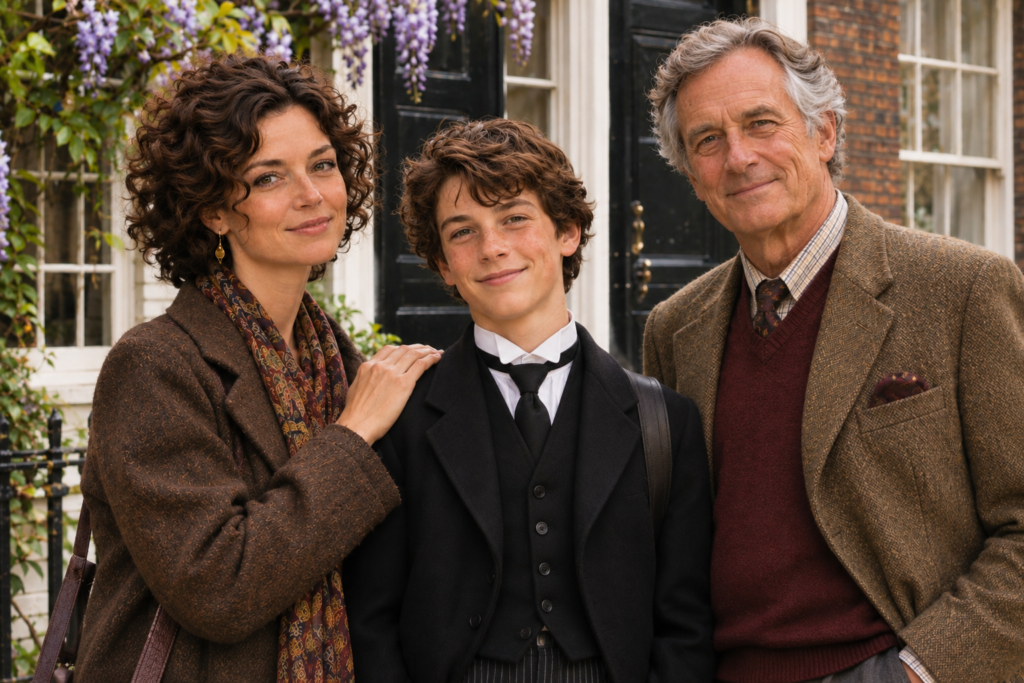
Did you notice? There is one detail in the photograph of me holding Jamie in Part 5 of the Chronicles, which I have not yet explained. You may have noticed that I am wearing a wedding ring. There is a reason for that, although I have so far kept it to myself.
As I mentioned earlier Richard and I had continued our relationship much as before Jamie was born. We were very much a couple, and he had been wonderfully supportive throughout my pregnancy. We had discussed our future together, but neither of us had felt any particular need to change the arrangement we had made for ourselves. I had my home in Blackfriars Street, and Richard had his own house. We were happy that way.
That changed rather unexpectedly the day after Jamie was born.
November 1994
Richard came to see Jamie and me in the hospital, and during that visit he asked me to marry him. He told me that he wanted Jamie to have his name, and that he wanted to make a proper commitment to both of us. He was not asking me to give up the house in Blackfriars Street or to change the life I had made there. He knew how much the house meant to me, and he had no wish to take that away.
I was rather taken aback, but my answer came almost before I had time to think about it. I said yes. I had not realised quite how much I wanted us to be married until he asked.
Mum and Dad were staying at Blackfriars Street at the time, ready to help me through those first days with the baby. I told them as soon as I could, and they were absolutely over the moon. They had always loved Richard and knew how much he meant to me. The news that we were to be married, and that Jamie would have his father’s name, delighted them both.
Richard was determined that we should not have to wait too long. He went to the Canterbury Register Office and arranged the first available appointment. We were married at eleven o’clock on 22 November 1994, just ten days after Jamie’s birth.
It was a very simple wedding. I wore a pretty dress which I was able to get into so soon after giving birth, and there was no elaborate ceremony or large gathering. Mum and Dad were there, of course, and we had a lovely lunch together afterwards before returning to Blackfriars Street. Later, we celebrated with a glass of champagne.
From that day I became Mrs Sasha Jane Bennett, and Jamie was registered as Jamie Richard Bennett.
It was not quite the conventional beginning to married life, but it suited us perfectly. We were already a family, and the wedding simply gave formal recognition to something we both realised we wanted.
1995
During the first few months of Jamie’s life, I gradually came to realise that I was not looking forward to returning to teaching as I had once expected. I had always enjoyed my work at St Anne’s School, and I had no complaints about the profession itself, but having Jamie changed the way I thought about my time and my priorities. I found that I wanted to be with him, to watch him grow and to be present for all those small developments which make up the early years of a child’s life.
Richard and I talked about it at some length. He was entirely supportive and felt, as I did, that there was no reason for me to return to teaching simply because that had been my intention before Jamie was born. He was in a position to provide for us, and we agreed that I could devote myself to bringing up our son without worrying about the loss of my teaching salary. This was not a decision to give up my independence or my interests. It was simply a choice about how I wanted to spend those years.
I was also conscious that I had a responsibility to the school. If I was not going to return for the autumn term, it was only fair to let the Headmistress know in good time so that a replacement could be found. By early summer I had made up my mind, and I wrote to explain that I would not be coming back in September. It was a decision I made with some sadness, but I knew it was the right one for me.
I had also begun to think seriously about writing something of my own. Over the years I had accumulated a great deal of knowledge through my work with Jemima’s papers, and I had sometimes found myself imagining stories which drew upon the people, places and circumstances I had encountered in her research. I had never really had the time to explore those ideas properly.
Now, with Jamie still very young and Richard’s support behind me, I began to see an opportunity. I would have time to bring up my son, but I would also have the chance to discover whether I could make something of my own writing. I knew that I was fortunate to be in a position to try, and I felt that if I was ever going to do so, this was the moment. There was no guarantee that I would succeed, but I had little to lose by trying.
I knew, too, that I was not closing the door on teaching for ever. If my writing came to nothing, there was no reason why I could not return to the profession, perhaps at another school. I was fortunate enough to have that choice. It meant that I could try something new without feeling that I was putting my future at risk.
I did not yet know quite what form my writing would take, but I was beginning to think beyond the historical investigations and family research which had occupied so much of my time. Perhaps I could use what I had learned in a different way, turning some of that accumulated knowledge into stories of my own.
1996
By the time Jamie was just over a year old, I had begun to think seriously about writing fiction. The idea was not entirely new to me. Jemima’s books had been on my bookshelves for years, and I had read them long before it occurred to me that I might one day attempt something similar.
There was Where the River Leads, the first part of her novel about Jemimah and Madhav, set in Calcutta at the beginning of the nineteenth century. I had always admired it. It was so different from her investigations, that I had come to know yet it carried the same careful attention to historical detail and to the lives of people living in another time. I knew, too, from reading her memoirs that it was Bella who had encouraged Jemima to write it, persuading her that she need not confine herself to what could be established from documents. Jemima had initially been reluctant, but the result showed what could happen when she allowed herself to use her imagination.
There was also the second part, Where the Letters Lead, which I thought was successful in quite a different way. Here, Jemima had allowed the letters to tell the story. The people spoke for themselves, their characters and relationships emerging through their own words. She had not needed to invent their conversations or imagine what they might have said; the evidence was already there, preserved in their correspondence. It was a reminder that historical material could sometimes provide its own narrative, if the writer knew how to bring it to life.
Then there was Jack: The Life and Fate of a Kentish Thief. That book had always seemed to me a rather different undertaking. It was an imagined account, but one closely tied to the surviving facts. Jemima had never been entirely pleased with it, and I thought I could understand why. There was so much historical material that the story sometimes seemed to struggle to find room for itself. The facts were fascinating, but they could also be restrictive.
Looking at the three books together, I began to appreciate something that I had not fully understood when I first read them. Jemima had been learning, just as I would have to learn. She had explored different ways of turning historical material into a story: allowing imagination to fill the gaps, letting original documents speak for themselves, and attempting to recreate a life where the surviving facts placed limits on what could be told. Each approach had its own possibilities, but also its own difficulties.
I realised that I would have to find my own way of doing the same. I did not want to write another collection of historical investigations, nor did I want to produce a work in which the research overwhelmed the people at its centre. What interested me were the lives themselves: the choices people made, the circumstances that shaped them, the opportunities they were given or denied, and the ways in which ordinary families were affected by the great changes taking place around them.
Jemima’s papers had given me an extraordinary education in those lives. Over the years I had absorbed details of occupations, homes, families, relationships, hardships and ambitions, often without consciously remembering where I had first encountered them. My own family research had added to that store of knowledge. I began to see that I did not need to write directly about any particular case or family. I could draw on what I had learned, combine it with further research and create characters and stories of my own.
In a sense, I was following a path Jemima had already taken, although I would be travelling it in my own way. Bella had helped her to make that first step, and Jemima’s books had shown me that it was possible. I was grateful to them both, even though neither could have imagined, when they began, where their encouragement and their writing would eventually lead.
My First Novel
I began work on my first novel in earnest during 1996. I had decided that my starting point would be Canterbury, a city I knew intimately and whose history I had come to understand through Jemima’s papers and my own research. The idea eventually became The Canterbury Inheritance.
I soon discovered that writing a novel was considerably more difficult than I had imagined. I had plenty of historical material to draw upon, and ideas for characters and situations came readily enough, but turning these into a coherent and engaging story was another matter. My first attempts were rather too heavily laden with research. I found myself explaining things that the reader did not necessarily need to know, and sometimes allowing historical detail to interrupt the flow of the narrative. I had to keep reminding myself that I was writing a novel, not another historical investigation.
There were days when the words seemed to come easily, followed by others when I could make little progress at all. I wrote passages, reconsidered them, and sometimes discarded whole sections that had taken considerable time to produce. I checked dates, occupations, buildings and social customs repeatedly, often finding myself returning to sources I had already consulted. I wanted the historical setting to be convincing, but I was slowly learning that accuracy alone would not make a good story.
Richard became my first reader and an invaluable sounding board. He was always interested in what I was doing, and he read successive drafts with care. He was well read and had a good instinct for when a passage worked and when it did not. He could tell me when the story was losing momentum, when a character’s actions did not seem convincing, or when I was explaining something at unnecessary length. He was encouraging, but he was also honest, which was exactly what I needed. We spent many evenings discussing the manuscript, and I gradually became better at recognising which of his suggestions would improve it and which decisions I needed to make for myself.
The most difficult lesson was learning to trust my imagination. I had spent so many years establishing what could be proved that it was not easy to become comfortable with what could be invented. I had to remind myself of what I had learned from Jemima’s books: the historical facts should establish the world in which the story takes place, but they should not dictate every conversation, every incident or every decision made by the characters. Within the boundaries of what was historically possible, I was free to let them live their lives.
It took much longer than I had anticipated, but I was determined to finish. There were moments when I wondered whether I was really capable of writing a novel, but I had become too absorbed in the story to give it up. Gradually the writing became more assured. I began to find a rhythm and a voice of my own, and I learned to recognise when further research was necessary and when I simply needed to let the story develop.
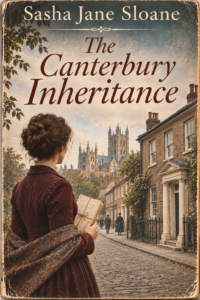 By the time I was satisfied with the manuscript, I had spent a great deal of time revising and refining it. It was submitted to publishers, and after some anxious waiting and the inevitable exchanges of correspondence, a publisher agreed to take it on. The Canterbury Inheritance appeared in 1998.
It was not an overnight sensation, nor did I expect it to be. But the response was encouraging. The reviews were generally favourable, the book found its readers, and I received letters from people who had enjoyed it and wanted to know whether there would be another. That meant a great deal to me. I had not set out to become famous; I had wanted to write stories that people would enjoy reading, and it seemed that I had succeeded.
More importantly, I had discovered that I wanted to do it again. The first novel had taught me how much there was to learn, and how demanding the process could be, but it had also shown me that I could do it. I had found the beginnings of my own way of writing, and I was beginning to understand how to bring together the historical knowledge I had accumulated with the freedom of imaginative storytelling.
The first book had taken me several years. I suspected that the next would be easier, though I knew better than to imagine that writing would ever be effortless. I had, at last, found something I wanted to devote myself to, and I was ready to continue.
Starting Again
The success of The Canterbury Inheritance encouraged me enormously, but it did not immediately make writing a second novel any easier. In some ways, I found the prospect rather daunting. I had spent so long living with the characters in my first book that I knew them almost as well as people I had met. I knew their backgrounds, their hopes and disappointments, the circumstances in which they lived and how their stories would end. When I sat down to write, I could return to their world without hesitation.
But a new novel was an entirely different matter. I had to begin again, and that meant finding a new subject, creating new characters, working out their relationships and discovering what would happen to them. There was no familiar world waiting for me, no established plot to follow. I had to start with an idea, and sometimes even finding that idea seemed difficult.
I also discovered that I was reluctant to leave the first book behind. Its characters had become familiar companions, and I found myself occasionally returning to them in my thoughts, wondering what might have happened to them after the story ended. But I knew that I could not spend my time trying to extend a story simply because I was comfortable with it. A novelist has to move on.
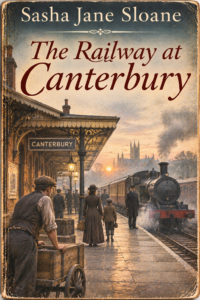 In the end, I found my way forward by returning to familiar ground. My second novel would be The Railway at Canterbury. I knew the city, I knew something of its railway history, and I had already become interested in the part the railway had played in the lives of its people. It was a subject that gave me a sense of security at a time when I was still finding my feet as a novelist. But although the setting was familiar, the people and their story would be entirely new.
This was perhaps my next important lesson. I had learned how to research and construct a historical novel, and how to allow imagination to work alongside the facts. Now I had to learn how to begin again: to put the previous book aside, take a fresh sheet of paper and approach a new story with an open mind. I could draw on what I already knew, but I could not simply repeat what I had done before. Even in a familiar setting, I had to allow new characters to emerge and take the story in its own direction.
As I became more confident, I would find myself willing to venture much further from familiar territory. Later novels would take me into different communities, occupations and periods of history, and I would no longer feel the need to begin somewhere I already knew so well. But The Railway at Canterbury gave me the confidence to make that first step away from my original story.
I was beginning to understand that each novel would have its own demands and its own surprises. The experience of the previous book would help me, but it could not write the next one for me. That, I realised, was part of the pleasure and the challenge of being a novelist.
Beyond Familiar Ground
The Railway at Canterbury was also well received, and its success gave me a little more confidence. I had discovered that I could leave the characters of one novel behind and create an entirely new story, even if I still found reassurance in a familiar setting. But I knew that I could not remain in Canterbury indefinitely. If I was to develop as a novelist, I needed to explore other places, other communities and lives very different from my own.
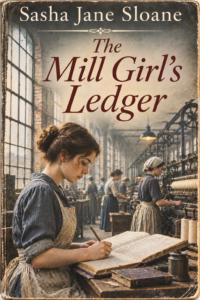 My next book, The Mill Girl’s Ledger, was to be my first real attempt to do that. I knew very little about the daily lives of women working in the mills of the nineteenth century, so almost everything about the world I wanted to describe had to be researched. I needed to understand the work itself, the hours, the wages, the conditions in which the women lived, and the part their earnings played in their families’ survival. I wanted to know not just what it was like to work in a mill, but what it meant to be a young woman whose choices were so often determined by the need to earn a living.
The research was fascinating, and I soon found myself accumulating far more information than I could possibly use. Once again, I had to be careful not to allow the historical material to take over the book. It was tempting to include every interesting detail I discovered, but I had to keep reminding myself that the reader was not there to study the industrial history of the period. They were there to follow the lives of the people I had created.
This time, however, I was beginning to recognise the problem before it became overwhelming. I had learned to distinguish between the information I needed in order to write convincingly and the information that actually belonged in the story. The research had to be thorough, but much of it would remain behind the scenes, informing the characters’ circumstances and decisions without requiring lengthy explanations.
It was also a new experience to write about a community so far removed from anything I had known personally. I had to imagine the sounds, smells and rhythms of a mill town, the closeness of working families, the pressures of poverty and the small pleasures that made life bearable. I could not simply rely on what I knew. I had to build the world carefully, and then allow my characters to inhabit it.
It was hard work, and I was still learning. But I found that I enjoyed the challenge. I was no longer simply writing about a place I knew and adding a fictional story to it. I was discovering an unfamiliar world through research, and then using my imagination to bring it to life. The Mill Girl’s Ledger marked an important step forward. It showed me that I could move beyond my own experience and write about people whose lives were very different from mine, while still finding the human concerns that connected us.
Remembering the Great War
By the time I came to write Letters from the Front, I had become much more confident in my work. I no longer approached each new novel with the apprehension I had felt when beginning The Canterbury Inheritance. I had learned to find my subjects, to research unfamiliar periods and communities, and to allow the story to develop without feeling that every historical detail had to find its way onto the page. I was also more willing to venture beyond the places and circumstances I knew personally.
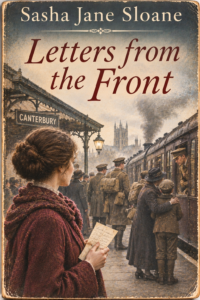 But Letters from the Front was different. The First World War had always held a particular place in my thoughts, largely because of what I had learned from Jemima. Through her memoirs and papers, I had encountered the young men in our own family who had been killed, and the grief and loss that followed their deaths. Edward Thomas Page and George Kingsley had been more than names in a family tree. As I read Jemima’s accounts and examined the surviving records, I began to understand something of the lives they had left behind, and of the families whose futures were changed by their absence.
I had also come across many other accounts of the war in the course of my research. Some described the experiences of men serving overseas; others revealed the anxieties of wives, mothers, sisters and children waiting at home. The individual circumstances differed, but the underlying emotions were often remarkably similar. There was separation, uncertainty, hope, fear and, all too frequently, grief.
At this point the war was nearly eighty years in the past. It was becoming something that younger generations knew increasingly through history books, commemorations and the occasional family recollection. I felt strongly that it must not be forgotten, and that remembering it meant more than recalling the battles and the military events. It meant remembering the people who had lived through it, the families who had waited for them, and the lives that continued, or sometimes never quite recovered, after the war was over.
I decided to tell the story through a series of letters between fictional characters. The idea of using correspondence to carry an entire narrative was not new to me. I had always been particularly interested in the way Jemima had approached the second part of her 2-part Jemimah and Medhav story, Where the Letters Lead, set in Penang. She had originally struggled to reconstruct the correspondence between Jemimah and Georgiana, but the eventual bequest of Charlotte Appleby’s diaries and letters had provided the material she needed. She was then able to complete the story, telling it entirely through their letters.
I had always admired the way Jemima allowed the correspondence to carry the narrative. The people revealed themselves through their own words: their personalities, their relationships, their hopes and anxieties, and sometimes the things they were unable to say directly. It seemed to me an especially effective way of telling a story in which people were separated by distance and circumstances.
I decided to use the same form, but for a story of my own. None of the correspondence was taken from Jemima’s papers; I invented the people and their letters myself. But the feelings and circumstances that shaped their lives came from everything I had learned about the First World War. I wanted the letters to reveal not only what was happening to those away from home, but also the changing lives of the people who remained behind. What might begin as ordinary family correspondence could gradually become more difficult to write, as news grew uncertain and the war’s consequences became harder to ignore.
I found the writing deeply absorbing. I had to research the period carefully, but by now I understood how to use that research without allowing it to dominate the narrative. The historical setting had to be credible, but the heart of the book was always the people and their relationships. I wanted readers to become attached to them, to look forward to their letters and to feel the uncertainty that each new one might bring.
When Letters from the Front was published, the response was particularly gratifying. Readers told me that they had been moved by the characters and that the letters had made the war feel personal to them. That was exactly what I had hoped to achieve. I was not trying to write another history of the First World War. I wanted to give readers a glimpse of the human lives behind it, and to remind them that every name on a memorial had once belonged to someone who was loved, missed and remembered.
In writing the book, I felt that I had brought together something of what Jemima had given me: her respect for historical evidence, her understanding of the importance of individual lives, and her willingness to explore different ways of telling a story. I had also taken up an idea she had once considered for herself, and given it a new life. But the book was entirely my own, and I was proud of it.
An established life
As the years passed, writing became an increasingly established part of my life. After the early struggles, I found that each new novel came a little more readily than the last. I had become more confident in choosing my subjects, developing my characters and deciding how much research a story required. I was still careful about historical accuracy, but I no longer felt compelled to investigate every detail before I allowed myself to write. I had learned to trust my judgement and, just as importantly, my imagination.
My books continued to find readers, and my publishers were pleased with their reception. As my list of titles grew, so did the royalties. A new novel brought its initial sales, but the earlier books continued to sell, often finding a new readership years after their publication. There were paperback editions, reprints and, occasionally, overseas publications. I was never a literary celebrity, nor did I particularly want to be, but I had become a successful and financially comfortable author. It was a very satisfying position to have reached, especially when I remembered how uncertain I had been about my first attempt.
Richard’s architectural practice was also well established, and between us we had a comfortable and secure life. He continued to contribute substantially to our family expenses, particularly Jamie’s education. We both regarded that as extremely important. We wanted Jamie to have opportunities and a good education, and Richard was particularly keen that the cost should never become a limitation on what he might achieve. My own earnings gave me considerable independence and allowed me to contribute in my own way, while the continuing success of my books meant that I was able to maintain and improve the house in Blackfriars Street.
Richard and I continued to keep our separate homes, although in practice we spent a great deal of time together. We had never felt the need to make a formal change simply for the sake of appearances. We had found an arrangement that suited us, and neither of us wished to give up a home that had become an important part of our individual lives. But as the years went by, the distinction between our two households became less significant. We shared meals, weekends, holidays and the ordinary routines of family life. Jamie moved easily between the two houses, and Richard was as much a part of everyday life at Blackfriars Street as I was at his home.
In truth, we were together far more often than we were apart. We had learned each other’s habits and preferences, and had developed a comfortable way of living alongside one another without feeling that either of us had lost our independence. There was no great adjustment to be made, and no particular timetable for changing things. We were happy as we were.
As for my parents, Connie and Adam, they remained an important part of Jamie’s childhood, as they had been of mine, but neither lived to see the end of the century. Their passing marked the end of another generation, and I found myself increasingly conscious of the responsibility of preserving the stories and memories they had left behind.
Jamie finds his way
Richard had always wanted Jamie to attend King’s School in Canterbury, where both he and his own father had been educated. In fact, it was almost taken for granted that he would follow the same path, and Richard was delighted when he was accepted there. Jamie received an excellent education there, but I think the experience gave him much more than academic knowledge. He met boys from a wide variety of backgrounds, learned to make friends and find his place among different kinds of people, and developed a confidence and independence that served him well in later life. He enjoyed his time there, and we were both pleased with the young man he was becoming.
His choice of university, however, was never in doubt. Jamie had been thinking about it for years. He had inherited my interest in history, research and literature, and his father’s fascination with architecture, art and historic buildings. He was curious about how people lived, how societies developed, and how the buildings and objects they left behind could tell us something about their lives. He read widely and enjoyed exploring subjects that did not always fit neatly into one academic discipline.
For him, Oxford was the natural choice, and the course in Archaeology and Anthropology seemed to bring together so many of his interests that he could hardly imagine studying anything else. He was determined to get there. It was an ambitious choice, and he knew he would have to work hard to achieve it, but he applied himself wholeheartedly. With good academic support, a strong reference from his Headmaster and considerable encouragement from Richard and me, he secured his place.
In the autumn of 2013, at the age of eighteen, Jamie went up to Oxford to begin his studies. We were immensely proud of him. It was a significant step in his life, and although I was naturally conscious that he was leaving home, I knew he was ready for the independence and opportunities that lay ahead. He had chosen his own direction, and he was setting out to discover where it would take him.
Jamie took to university life very well. Oxford was undoubtedly an eye-opener, with its mixture of people, ideas and experiences, but Jamie was naturally curious about others and was not easily fazed. He enjoyed his studies, worked steadily and came through his three years with a good degree in 2016. Unlike some of us in the previous generation, who had been pleased enough to obtain a degree and then had to consider what to do with it, Jamie already knew exactly where he wanted to go.
He was determined to work in heritage research, and he wasted little time in finding his way into the profession. He secured a position with Historic England, where his academic interests could be put to practical use in researching historic buildings, their architectural development and the communities and lives associated with them. It was desk-based work, involving archives, old maps, plans, photographs and documentary evidence, with occasional visits to the places he was studying. He had found precisely the sort of work he wanted.
He also developed some fairly strong opinions about the importance of protecting our historic inheritance. Jamie could be quite forceful on the subject, and Richard and I were sometimes on the receiving end of lengthy explanations about the need to preserve buildings and places rather than simply replace or modernise them. He was particularly passionate about the responsibility we all have to pass on our architectural and cultural heritage to future generations. We could hardly disagree with him, although his enthusiasm occasionally left us in no doubt about what he thought!
In many ways, he had found his own path by bringing together interests that had been part of his life since childhood. My books and research had given him an appreciation of family histories and the lives behind historical records; Richard had introduced him to buildings, architecture and the importance of preserving them. Jamie had taken those influences and made something entirely his own.
The Blackfriars House and its future
Jamie had become increasingly interested in the preservation of historic buildings and places, and his work gave him opportunities to see how other countries approached the subject. He travelled quite extensively, sometimes in connection with his professional work and sometimes simply because he wanted to see particular places for himself. He visited historic towns and cities, studied their architecture and conservation projects, and took a keen interest in the ways in which different countries protected their built heritage.
Some of what he saw impressed him enormously. Elsewhere, he was dismayed by the neglect of historic buildings or by the damage caused when development was allowed to take precedence over preservation. He returned from these trips with photographs, observations and opinions, and we were often treated to vigorous discussions about what had been done well, what could have been done better, and what lessons we might learn in this country. He was particularly concerned that preservation should not be confined to grand houses, churches and monuments. Ordinary streets, workplaces and domestic buildings were also part of our history, and deserved to be understood and protected.
He continued to come back to Canterbury regularly, and whenever he was in the city he would spend time at Blackfriars Street. He had always known the house, of course, but as he grew older he began to see it differently. He understood its architectural character, but he was also increasingly aware of its place in our family history. It was the house in which Jemima had lived and worked, where Bella had spent so much of her life, and where successive generations of our family had made their homes. It contained not only our memories but the physical setting in which so much of our history had unfolded.
By 2021 or 2022, Richard and I had begun to talk about the future. I had no immediate intention of leaving Blackfriars Street, but I was conscious that the house was a substantial responsibility, and that there would eventually come a time when I might want to make life a little simpler. On one occasion, I mentioned to Jamie that I had sometimes wondered whether selling it might be the sensible thing to do.
He was having none of it.
He was quite emphatic that I should not sell the house. He wanted me to leave it to him, and he made it clear that this was not simply a sentimental attachment to the place where he had grown up. He believed that it was something worth preserving, both as a building and as part of our family’s history. He understood its importance, and he wanted to take responsibility for it himself.
I was rather taken aback by the strength of his feelings, although perhaps I should not have been. Jamie had spent years developing his own understanding of the importance of preserving our historical inheritance, and here was something very close to home in which he could put those convictions into practice. He knew what the house meant to me, and he wanted to ensure that it would remain in the family, cared for and respected, rather than pass into the hands of someone who might not understand its history.
I was deeply touched. For so many years I had thought of myself as the custodian of Jemima’s house and papers, conscious that I had inherited something that was not mine alone to dispose of. I had tried to preserve what she left behind, to make it accessible to others and to add our own family’s story to it. Now Jamie was telling me that he wanted to continue that responsibility.
I realised that the house had a future beyond my own lifetime. It would not simply be something I had inherited and eventually had to relinquish; it would pass to someone who understood why it mattered and who wanted to protect it. That knowledge gave me a sense of reassurance I had not quite appreciated I needed.
Eventually, the time came to do what Jamie had asked. There was no particular ceremony. I handed him the keys to the house in Blackfriars Street, and with that simple act I passed on a responsibility that had been mine for so many years. He was ready for it, and I knew he understood what the house meant, not only to me but to all those who had lived there before us. I moved into Richard’s house, taking with me my books, my papers and the things that had become part of my own life. It was not a difficult departure. I was not losing the house; I was entrusting it to the next generation.
A hundred years on
As I write these final pages in 2023, I find myself thinking about the hundred years that have passed since Jemima completed her memoirs. When she finished writing in 1923, she had recorded a lifetime of experience, the people she had known, the work she had undertaken and the world in which she had lived. She could not have known that, a century later, her great-great-niece would be sitting down to bring her work together with the stories of the generations that followed her.
So much has changed in those hundred years. The world Jemima knew has disappeared. A second world war has been fought; society has been transformed; the roles and opportunities of women have altered beyond anything she could have imagined. The ways in which we communicate, travel, work and live have changed almost beyond recognition. Yet, when I look through the family papers, I am constantly reminded that some things remain much the same. People still fall in love, raise children, worry about their families, make difficult choices, experience loss and hope for better things. The circumstances may change, but the human feelings beneath them are familiar.
And through all those changes, there has been the house in Blackfriars Street.
It was Jemima’s home, the place where she lived and worked, where she kept her papers and pursued her investigations. It was also Bella’s home, and later Beatrice’s, Connie’s and mine. It witnessed the arrival of children, the departure of young people to make their own lives, the anxieties of wartime and the ordinary routines of family life. Its rooms have been altered, its furnishings changed, and its occupants have come and gone, but it has remained a constant presence through generations of change.
For me, the house has always represented more than bricks and mortar. It was where I discovered Jemima’s papers, where I first began to understand the remarkable woman who had left them behind, and where I found the material that would shape so much of my own life. Without that discovery, I might never have become a family historian, an editor or a novelist. The house gave me the opportunity to know people I had never met, to recover stories that might otherwise have been lost, and eventually to tell stories of my own.
Jemima left me far more than her memoirs. She left her investigations, her correspondence, her family records and the accumulated knowledge of a lifetime. Her work taught me how to look at the past, to question what I found and to recognise the lives behind the documents. Bella had encouraged her to use her imagination, and through Jemima’s books I discovered that I could do the same. In ways neither of them could have foreseen, their work had helped to shape mine.
I have tried, in my turn, to add something to what they left behind. My family chronicle has carried the story through another century, bringing together the lives of those who came after Jemima. My novels have allowed me to explore other times and other lives, drawing on the knowledge I inherited and the research I undertook myself. I hope that, in some small way, I have helped to preserve something of the people and the world that would otherwise have been forgotten.
Now Jamie has taken on the house. He has his own interests, his own work and his own ideas about the importance of preserving our heritage. He will care for it in his own way, and I have no doubt that he will add his own experiences to its history. He does not need to become another Jemima or another Sasha. The house does not require that. It simply needs someone who understands its significance and is willing to look after it.
When I think of Jemima finishing her memoirs in 1923, and of myself bringing this collection to completion in 2023, I am struck by the coincidence of the hundred years between us. She recorded the life she had lived; I have tried to record hers alongside those of the generations that followed. Neither of us could have known exactly where the story would lead, or who would eventually read it.
I am sixty-eight now. I have had a life full of people, work, discoveries and unexpected opportunities. I have been fortunate in my family, in Richard, in Jamie, and in the chance to do work that has given me so much pleasure. There are still stories I might write, and I hope I shall continue to do so. But this particular piece of work feels complete.
The house in Blackfriars Street is no longer mine to look after. I have handed over the keys, and I did so without regret. I know that Jamie will open the door, walk through its rooms and make his own life there. The past will remain in its walls, but the house belongs to the future as much as it belongs to the past.
Perhaps that is what I have been trying to do all along: to make sure that the stories of those who came before us are not lost, while recognising that every generation must make its own story.
Jemima finished hers a hundred years ago. I have finished mine. And the house in Blackfriars Street is waiting for the next chapter.
THE END