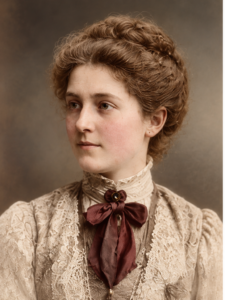
 On 3 September 1879, Elizabeth Mary Edwards, aged 18, disappeared from her home in Fairfield, Liverpool. What made the case particularly intriguing was that she came from a respectable, apparently comfortable family. Her father, Edward Henry Edwards, was a newspaper reporter, the family lived at 35 Rufford Road, and they employed a domestic servant.
Elizabeth was also, according to the contemporary reports, engaged to be married. On the day she disappeared she had gone out intending to buy a birthday present for her fiancé, whose 21st birthday was only two days later. And then she simply vanished.
For weeks there were reports of sightings and possible journeys, but none could initially be proved. Then Elizabeth was found alive in London. And that is where our mystery began.
On 20 October 1879 Elizabeth was located in London by private detective Richard Alfred Lloyd. She had been staying with a young woman named Lizzie Pickford, an actress living in Brompton. Lizzie Pickford’s account was extraordinary, which appeared in a number of newspapers. Here’s the report from the Liverpool Post on 27 October 1879.
| THE CASE OF MISS EDWARDS NARRATIVE OF HER COMPANION Miss Lizzie Pickford, who met Miss Edwards in London, and took her to live with her at Brompton, has furnished to the Central News a narrative from which we make the following extracts: “I first met Miss Edwards on the 20th September, in Hyde Park. In the course of a conversation she said she had been trying to get a barmaid’s situation, and would like to go on the stage if she could find an opening. I advised her not to think of going on the stage as she would find it very hard, up-hill work. After this interchange of speech, she became more communicative and talked about her affairs. She told me she was staying in Queens-road, Bayswater, in a respectable place. I asked her when she had any food last, as I noticed she was very pale, and as if she was in absolute want. She said she had nothing to eat since the morning before, but I afterwards learned that she had really partaken of no food for two days. I at once asked her to come home with me and have some dinner. After some persuasion she consented to come, and I took her to my apartments in Stamford-street. After dinner I asked her if she would like to stay with me until she got something to do. She seemed very pleased, and said she would like to very much. She said she was always called Cissy at home. She further stated that her surname was Elliott, and that she came from Liverpool. I asked why she left Liverpool, and she told me she had been living with an old lady who was unkind to her, as she was trying to force her to marry an old man. That was the reason which led to her leaving Liverpool. She said she left her home, at Fairfield, in the afternoon, with the intention of coming to London and met some chapel acquaintances in the omnibus, but she merely nodded to them. I think she told me she got out of Fairfield omnibus at the Monument in London-road. She then went to a pawn shop and pawned her ring. Directly afterwards she crossed to Birkenhead, where she took a ticket to Shrewsbury. She arrived there late at night. On the following day she left for London, and got out of the train at Willesden Junction. She was very much surprised, she told me, when she got there, as she thought she should find herself in the heart of London. She asked a woman in which direction London lay. She was directed and after walking some distance got into a Bayswater omnibus. She told me stayed in the Queens-road, Bayswater. We then arranged that she should fetch the few things she had in Bayswater, and come and live with me. This she did, and we soon became on the most affectionate terms. We stayed at Stamford-street for about a week, and then left for Brighton for a holiday. I paid all the expenses on this occasion, as I had grown very fond of my new companion, and I also bought her a fishwife dress and a few other articles of clothing. We stayed at Brighton ten days, and while there a gentleman on the pier one evening asked us if we had heard of the ‘Liverpool mystery’. He turned to Cissy and said, “And I believe you are the very girl’. Miss Edwards made no answer. After a few more remarks he left us. This was the first time I had ever heard anything about the ‘Liverpool mystery’. On Monday morning I got the newspapers, and read the account, and from the description of the dress it seemed to fit my companion. When I read the account I said ‘It is you Cissy.’ She said it could not be her, because she had no parents. I said no more but suspected it was her.” Miss Pickford also says: – “Miss Edwards never mentioned anything which would lead anyone to suppose that she came to London otherwise than her own accord, or that any means were used to induce her to leave her home. Had she been drugged or outraged, I feel positive her story would have been entrusted to me.” |
And so we had a new mystery: Why had Elizabeth travelled to London?
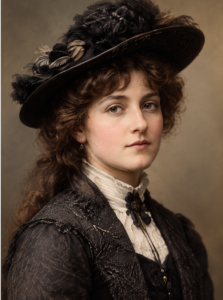 Lizzie’s Pickford’s account suggested that she had travelled there of her own accord. That was radically different from the theory circulating in Liverpool that Elizabeth had been abducted, perhaps while unconscious after one of the fainting attacks from which she had recently suffered. The newspapers had portrayed her as happy at home, devoted to her parents, engaged to a young man;, apparently having no reason to disappear, and therefore possibly abducted or removed while unconscious. There was even a specific purpose attributed to her outing: she had gone to buy her fiancé’s 21st-birthday present. This made a voluntary disappearance seem very difficult for the family to understand.
But Lizzie Pickford’s account was very different. Elizabeth allegedly told her that she had travelled from Liverpool to Birkenhead, then to Shrewsbury and onto London, and was looking for employment. She also spoke of wanting to work as a barmaid and possibly go on the stage.
In September 1879, Elizabeth had supposedly been traced to Shrewsbury – and this became the most fascinating part of our investigation. Witnesses claimed to have seen a young woman answering her description. She was said to have stayed at Beddow’s Temperance Hotel. There was also a mysterious man: several witnesses described a gentleman who appeared to be dressed rather like a clergyman and who was seen with the young woman. At one point the evidence was considered so strong that the Evening Express reported that her journey to Shrewsbury had been “placed beyond doubt.”
But then everything began to unravel. This was one of the biggest breakthroughs in our investigation.
By 27 September 1879, the Liverpool Weekly Mercury was reporting that the girl at Beddow’s was not Miss Edwards. The supposedly decisive photographic identification was no longer reliable. That meant the investigation had been built, at least partly, on the identification of the wrong woman. And this gave us an important distinction: A woman resembling Elizabeth may genuinely have travelled through Shrewsbury — without that woman necessarily being Elizabeth. That possibility became central to our interpretation of the case.
Even after the identification was challenged, people connected with the case continued to defend it. Mrs Ellen Welsh of Shrewsbury supplied a detailed account. She described the young woman arriving late in the evening, her appearance and clothing, conversations with members of the Welsh household and, importantly, the mysterious man. But she also raised questions about the reliability of the identification. She pointed out that: the train arrived late; it was dark; the woman’s hat partly concealed her features; the witnesses had only seen her briefly; the photograph was shown to them days later. She even suggested an alternative explanation — that the woman might have been connected with a hotel or refreshment room and had travelled to Shrewsbury to meet someone. That was supposition, not proof.
Samuel Campbell, who identified himself as connected with the Edwards family, strongly defended the Shrewsbury evidence. He challenged the criticisms of the witnesses and argued that the story deserved to be taken seriously. The newspapers consequently became almost a courtroom, with: Campbell and the family side versus Welsh and other witnesses questioning the identification.
At the same time, a possible Birmingham sighting at Corbett’s Hotel appeared.
So by October 1879 we had multiple possible sightings — but no secure continuous journey.
Around 20 October 1879, Elizabeth was finally located in London, and this completely changed the character of the mystery.
We no longer had: “Where is Elizabeth Edwards?” We had: “What happened to Elizabeth Edwards between 3 September and 20 October?” That seven-week gap became the real mystery.
As we have read Lizzie Pickford’s account of what happened (above) that suggested that Elizabeth had not been abducted at all. Lizzie Pickford specifically said that Elizabeth had never given her reason to think that she had been brought to London against her will.
This was potentially the most important evidence we found — but it was still an account given by Lizzie Pickford of conversations with Elizabeth, rather than a statement by Elizabeth herself published in the newspaper.
Dr John Henry Wilson, who had treated Elizabeth in August 1879, supplied a certificate. He said he had treated her for attacks described at the time as being of an “epileptiform character (petit mal)”. After her return he saw her twice and reported that she was suffering from “melancholia” and was so incoherent that he considered it impossible to obtain a reliable account of the preceding seven weeks.
That is enormously important. Because it means that when Elizabeth was finally back with her family, there was contemporary medical evidence that she was not in a condition to give a reliable chronological account of what had happened.
It doesn’t tell us what happened. But it explains why the mystery could not simply be resolved by asking Elizabeth.
The perhaps most interesting feature of the whole case is the fact the story went through several distinct phases:
September: “She has disappeared — perhaps she has been abducted.”
Mid-September: “She has probably been traced to Shrewsbury.”
Late September: “No — the Shrewsbury identification may be wrong.”
October: “Perhaps the Shrewsbury woman really was her after all.”
20 October: “Elizabeth has been found in London.”
25–27 October “The earlier account was wrong; Elizabeth’s condition makes questioning her impossible.”
That was an extraordinary evolution to watch through contemporary newspapers.
But, interestingly, the Edwards family eventually accepted Pickford’s account sufficiently to send her a gift and money.
We then followed Elizabeth beyond the disappearance. In the 1881 census Elizabeth, aged 19, was still at home with her family, at 35 Rufford Road, West Derby with no occupation recorded. There were now a total of 8 children. Her father remained a newspaper reporter and the household still employed a servant. That reinforces the impression that this was a reasonably established household.
Later that year Elizabeth married Isaiah Leather. Isaiah was a veterinary surgeon, although by the 1890s and he was known professionally and in census records as Arthur Leather.
In the 1891 census Elizabeth and Arthur were living at 83 Great Mersey Street, Liverpool. Elizabeth was 26, and Arthur was 32.There were no children.
From that time the marriage appears to have become increasingly unhappy or at least geographically separated:
In the 1901 census we couldn’t locate Elizabeth. But Arthur (now aged 42 and married) was a boarder with the Muse family in Bootle.
In the 1911 census Arthur was a boarder in a temperance hotel in Bootle, and still recording e was married. Elizabeth, meanwhile, was living with her widowed mother Martha and sister Martha Jane at 28 Tarler Road, Lower Bebington. Elizabeth was 49, married, and a stewardess. The household still had a servant, so even though Elizabeth herself was working as a stewardess, her mother’s household appears to have remained relatively comfortable.
 Elizabeth’s life a stewardess, turns out to be extraordinarily interesting.
She appears in surviving shipping evidence from 1898, including the Cuban, and later served aboard the Cedric and Olympic.
Then, in April 1912, she signed on to the Titanic as a stewardess. She survived the sinking in Lifeboat 16 and subsequently gave evidence at the British Wreck Commissioner’s Inquiry. She appears in Encyclopaedia Titanica (although I think there is an entry concerning her whereabouts in 1901. She was not the Elizabeth Leathers in Garston who is a widow with an 11-year-old daughter Anna.)
Elizabeth Mary Leather died on 29 June 1937 aged 76 and she was buried in Bebington Cemetery in the Wirral. The photo on the right is a genuine photo of her in later years.
So the young woman who disappeared mysteriously from Liverpool in 1879 went on to live another forty years — and became a Titanic survivor — which is quite an extraordinary arc to her life.
Female independence and respectability
The Miss Edwards case gives us a fascinating glimpse into the narrow boundaries surrounding female independence and respectability in late Victorian Britain. Elizabeth was a respectable 18-year-old from a comfortable family, apparently happily engaged and living at home, yet the moment she disappeared without explanation, her actions became a matter of intense public concern. The contemporary newspapers struggled to imagine that a young woman might simply decide to leave home and make her own way in the world. Instead, they searched for an explanation: had she been abducted, mistreated, accidentally injured, or perhaps suffered one of the attacks from which she had recently been subject? Even the possibility that she had deliberately gone away required justification. This reflects a society in which a respectable young woman’s behaviour was closely connected to the reputation and security of her family, and in which a woman travelling alone could easily be regarded as vulnerable or morally suspect.
Elizabeth’s reported ambitions in London are particularly revealing. According to Lizzie Pickford, she said that she was looking for work as a barmaid and hoped eventually to go on the stage. Women’s employment was expanding considerably by this period, but it was still strongly influenced by ideas about what constituted “respectable” work. Governessing, teaching and certain forms of domestic or professional employment could fit comfortably within middle-class expectations; other occupations, particularly those involving public houses, theatres or the entertainment world, carried much greater moral anxiety. The figure of the female barmaid was becoming increasingly visible in the 1870s and was controversial precisely because she represented a young woman earning her own living in a public, male-dominated environment associated with alcohol and sexuality. For Elizabeth to contemplate such work therefore suggests a desire for a degree of independence that was rather different from the sheltered future her family might have expected for her. Her experience also shows how precarious that independence could be: according to Pickford’s account, she arrived in London without secure employment or accommodation, had pawned or sold jewellery and had at times been without food. Yet she was also helped by another woman, Pickford, who took her into her home and cared for her — a reminder of the informal networks through which women could support one another outside the family.
Perhaps most revealing of all is the question of who was allowed to tell Elizabeth’s story. We never obtain a simple, authoritative account from Elizabeth herself. Instead, her story is reconstructed through her parents, the police, witnesses in Shrewsbury and Birmingham, members of the Edwards family, Dr Wilson and finally Lizzie Pickford. Their accounts conflict dramatically. The Shrewsbury witnesses attempted to establish her identity through her appearance, clothing and behaviour; the family sought an explanation consistent with a respectable young woman who would never willingly abandon them; Dr Wilson provided a medical explanation for why she could not then give a coherent account; and Pickford presented a young woman who appeared to have travelled voluntarily and was seeking work and a different life. The case therefore tells us more than what happened to one missing girl. It shows Victorian society trying to decide what kind of woman Elizabeth was — respectable daughter, vulnerable victim, troubled young woman or independent runaway — and how difficult it was for a young woman who stepped outside the expected boundaries of family and respectability to control the story told about her.
CONCLUSION
The fairest conclusion we reached was not that we solved the mystery, but that we changed the question. At the beginning it looked like a possible abduction mystery. The contemporary evidence gradually made that increasingly uncertain. The really satisfying thing is that we don’t need to solve the 1879 mystery to regard the case as successful research. We have taken Elizabeth from a mysterious 18-year-old who vanished from Liverpool, reconstructed her family and marriage, followed her into a completely unexpected career, and established her place in the Titanic story. In other words we actually got a lot further than the original mystery question suggested. The “Miss Edwards Mystery” case began as a disappearance puzzle, but it became a much broader piece of family and social history.
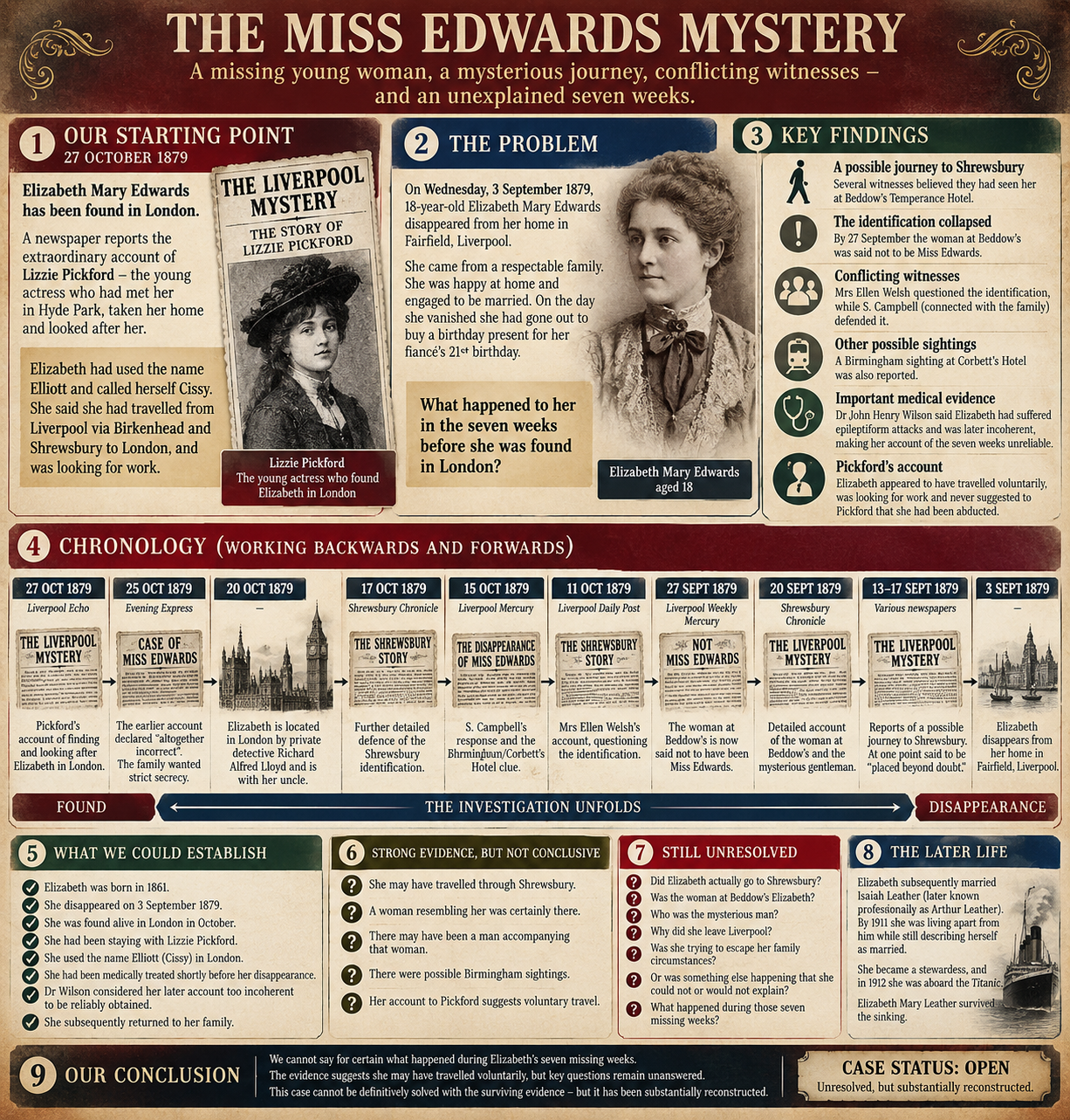
Note: Images created by ChatGPT except the photo of Elizabeth Edwards in later years.