The mystery began with a newspaper report I discovered in The Coventry Times and Warwickshire Journal dated 2 February 1870 and headed “A DEAD CHILD SENT AS LUGGAGE “. However, I subsequently found a report in the Sunday Dispatch of the 23 January 1870 which revealed much more about the case, and that is the one that appears below.
| A SERIOUS CASE OF INFANTICIDE – On Tuesday Mr Carter held an inquest at the Canterbury Music-hall, Westminster-road, respecting the death of a male child,, which was sent through the Parcels Delivery Company to the manager of the above-named hall. Sarah Pearl, a servant at the Canterbury-hall, deposed to the receipt of the parcel on Friday morning. It was directed to Mr. Moreton, the manager of the hall, and contained a small work-box, which upon being opened was found to have the body of a child inside it. Mr. Thomas Morton, manager of the Canterbury-hall, said he did not know where the child came from. On the inside of the lid of the box was a piece of paper with the following words in writing: “This is yours. Bury it. that’s all I want.” He did not know the writing. Mr Thomas Baker, a confectioner residing in the Longborough Road, Brixton, deposed to having received the package to be sent by the Delivery on Thursday last. A woman brought it into the shop. He could not see her face, for she had a thick black veil on. She wore a black bonnet and was attired in a black dress and shawl, and was about 22 years of age., with a thick black veil concealing her face. She was only a minute or two in the shop, and refused to pay for the booking of the parcel. She appear very excited, and left before he had time to look at the parcel. Mr. Sheppard, coroner’s office, said every inquiry had been made in order to find out who the mother of the child was, but as yet without result. Mr. Walter Monday, surgeon, 75, Kensington-road, said the deceased was a fine, full-sized child. It had not been attended to at birth. It was covered in road mud, and appeared to have been dragged along the road. The base of the skull was fractured in two places, and this would have caused by a blow or fall. Police-serjeant Edwards, 15L, said the box in which the body was found was seven inches wide and ten inches in length. The box was covered with coloured paper, such as is used for the covering of bonnet boxes. The Coroner said the case was of a singular nature, and probably if the inquiry was adjourned some clue would be obtained as to the guilty party. The inquiry was adjourned for a week. |
According to the report of the 2 February 1870, the woman couldn’t be traced, and the jury eventually returned a verdict to the effect that the child died from the fracture of the skull.
The first thing we did was to investigate unidentified infant registrations from Q1 1870 and found numerous examples of newborns being registered in ways consistent with this case. The death certificate of one child in the Kensington registration district was obtained and conclusively eliminated. Other death certificates of possible “unknown” male infants do exist, but even if we did find the correct child, it is unlikely their death certificate will reveal much beyond the information already contained in the inquest
The Canterbury Music Hall
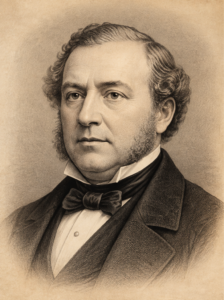 So, our attention then moved to the Canterbury Music Hall, which I was not at all familiar with. Researching it revealed that it was one of the most important early London music halls. It developed from Charles Morton’s Canterbury Arms public house, where musical entertainment was initially provided in a concert room attached to the pub.
In late December 1867 William Holland took over the management of the Canterbury and refurbished the hall at considerable cost. So, this means that Charles Morton wasn’t the proprietor at the time of this case,
By 1869–70 the Canterbury Hall was offering a mixture of musical performances, dancers, burlesques, ballets and variety entertainment, together with substantial refreshment and drinking facilities.
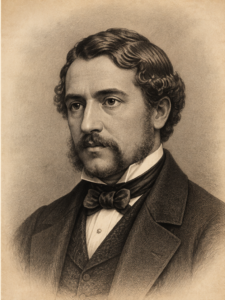 An important discovery in this case was finding that Thomas Morton was a part of the Canterbury’s organisation in the period surrounding the baby’s death. In April 1869, he was reported as being in charge of the refreshment bars, and at the time of the January 1870 inquest he was described as “manager of the hall”.
A report dated 6 February 1870, only a few weeks after the baby was discovered, identified William Holland as the proprietor; Charles Holland as the acting manager and Thomas Morton as being in charge of the refreshment bars. Thus Thomas had a substantial operational role at the Canterbury, even though he was not the proprietor or overall acting manager.
We then traced a Thomas Morton (born in 1831) who married Martha Gibson in 1854, and, crucially, this turned out to be the younger brother of Charles Morton, the founder and major figure behind the Canterbury Music Hall.
Thomas’s occupational history was unusual. In 1854 at the time of his marriage, aged 27, he was described as a “writer”. In 1861 he was living in Princes Square, Kennington with his family where he was a “cellarman”, and in 1871 (after the event) he was still living in Princes Square, and described as “late licensed victualler”. In 1881 his wife, Martha, was at 3 Argyle Street, Gray’s Inn Lane, whilst Thomas was “away on business”. In 1891, aged 58, he was living at 5 Greaves Road, Islington, where his occupation was a “bill poster”. The precise circumstances in which Thomas became a licensed victualler remain unknown.
So was it Charles’s brother, Thomas, who was the bar manager at the Canterbury Hall? This remains unproven, but is now a significant possibility; the evidence is circumstantially attractive. One possible interpretation is that Thomas had taken a position managing the Canterbury’s refreshment bars, perhaps using his experience in the licensed trade and his family connection with Charles. It is also possible that this was a relatively short-term position.
Did the baby scandal end Thomas’s Canterbury career? This is one of the most intriguing possibilities, since by 1871 Thomas is described as “late licensed victualler.” It is tempting to suggest that Thomas lost his position as a consequence of the scandal. However, we found no direct evidence of dismissal or resignation, nor a report naming a replacement for Thomas. This therefore remains an interesting hypothesis, not an established conclusion.
A July 1870 a report in The Era states that a Thomas Morton was taking a farewell benefit after twenty years’ connection with the Canterbury Hall. This created another identity problem. Was there another Thomas Morton?
There was another Thomas Morton, the younger son of the playwright Thomas Morton and brother of the playwright John Maddison Morton, who had a theatrical career and connections with the London stage. It remains possible that the July “twenty years’ connection” referred to this theatrical Thomas rather than Charles Morton’s brother.
Alternatively, it may have referred to the Thomas who had been working at the Canterbury’s refreshment bars. We found insufficient evidence to decide between them. Importantly, the July statement does not say that the man had spent twenty years managing the refreshment bars. The “twenty years’ connection” may have referred to a broader theatrical association with the Canterbury.
The relationship between Thomas and the child: The note – “This is yours. Bury it. That’s all I want.” – strongly suggests that the sender believed Thomas had some personal responsibility for the child. But whether this meant that he was the father; that he was otherwise responsible for the pregnancy, that the child was connected with someone in his household or something entirely different cannot be established.
We investigated the performers appearing at the Canterbury, including Nelly Power (a burlesque dancer), who was performing there in April 1869 (9 months before the child’s body was found). Although Nelly would have made a spectacular candidate for the mysterious woman, there is no evidence connecting her with Thomas Morton or the dead child. In fact she would only have been 16 years old at the time, but what’s more she was appearing at the Canterbury on Boxing Day 1869.
More broadly, the investigation established that the Canterbury employed numerous female dancers and performers, any of whom could theoretically have known Thomas personally. So no evidence has been found identifying the young woman.
Victorian Music Halls: Entertainment, Commerce and the Changing Face of Leisure
The Canterbury Music Hall provides an excellent illustration of the emergence of the Victorian music hall from the older world of the public house. Charles Morton and his brother-in-law Frederick Stanley acquired the Canterbury Arms in Lambeth in 1849, and Morton began by providing musical entertainments in a room attached to the pub. The popularity of these performances led to the construction of a purpose-built hall, which opened in 1852 and is generally regarded as the first true purpose-built music hall. Morton subsequently became known as “the Father of the Halls,” and the success of the Canterbury helped establish a model which was widely imitated.
The Canterbury also demonstrates how closely entertainment and commercial hospitality were intertwined. Audiences originally sat at tables while food and drink were served, and admission itself could take the form of a refreshment ticket. By the 1850s the hall had expanded considerably, accommodating hundreds of people and offering an increasingly sophisticated programme of singers, dancers, comedians, burlesques and other speciality acts. Our own newspaper evidence makes this commercial structure particularly tangible: in 1869–70 Thomas Morton was responsible for the refreshment bars, while William Holland was proprietor and Charles Holland acting manager. The bar was therefore not an incidental part of the theatre but an important element of the business.
The Canterbury also illustrates the extraordinary growth and changing social position of popular entertainment during the Victorian period. Music halls began as largely working-class entertainment associated with pubs and tavern concert rooms, but by the mid-Victorian period they were becoming professionalised, commercial enterprises and attracting a wider audience. Morton deliberately encouraged women to attend, believing that their presence would help make the halls more respectable. The result was a fascinating tension: the music hall was simultaneously a place of popular entertainment, alcohol, sociability and commercial pleasure, and an establishment anxious to demonstrate its respectability.
That makes the Canterbury particularly valuable for social history because our mystery actually takes place inside this new Victorian world of mass entertainment. The mysterious woman, the dancers and other female performers, the bar staff and managers, and the large mixed audience all belonged to a rapidly developing leisure culture that was quite different from the older world of the male-dominated tavern. Charles Morton’s achievement was not simply to build a large hall; he helped create a new form of urban popular culture that would spread throughout Britain.
Respectability, Women and the Uneasy World of the Music Hall
The second important Victorian theme is the complicated relationship between women, respectability and popular entertainment. Music halls provided employment and public visibility for large numbers of women as singers, dancers, actresses and other performers, while also creating a social environment in which men and women could meet outside the more closely controlled settings of home, church and family. Charles Morton deliberately admitted women to the Canterbury and promoted the idea of a mixed audience, partly because he believed their presence would have a “civilising” influence.
Yet this attempt at respectability existed alongside considerable anxiety about the morality of the music hall. Female performers were particularly vulnerable to assumptions about their character. Actresses and dancers could be unfairly associated with prostitution simply because they worked in an environment where prostitutes were also present, while middle-class moralists regarded theatres and music halls as potentially dangerous spaces of alcohol, sexuality and disorder. Modern scholarship cautions strongly against assuming that female performers were generally prostitutes: music-hall audiences included working women, couples and families, and women could regard the halls simply as places of leisure and employment.
That tension is especially relevant to this particular mystery. The newspaper’s description of the mysterious woman — young, heavily veiled, visibly agitated and determined to conceal her identity — belongs to a society in which female sexuality, pregnancy outside marriage and illegitimacy could carry enormous social consequences. We cannot establish that she was a performer or that she had any relationship with Thomas Morton, but the setting makes the question particularly interesting. If the woman was connected with the Canterbury, she was part of a world in which women had unusual opportunities for paid employment and public independence, but where their reputations could still be extremely vulnerable.
The case therefore gives us a glimpse of a particularly Victorian contradiction: the music hall was opening new opportunities for women while simultaneously placing them in a morally ambiguous public environment. It was a place where respectable entertainment, alcohol, commercialism, working women, sexuality and social mixing existed side by side. The mystery of the unidentified mother cannot be solved from this alone, but the setting helps us understand why an unmarried or otherwise vulnerable woman might have had very strong reasons for concealing a pregnancy and the circumstances of a child’s birth.
CONCLUSION
The mystery remains unsolved, but the investigation has uncovered considerably more than the original newspaper story.
We have reconstructed the circumstances of the baby’s death, established the nature and significance of the Canterbury Music Hall, explored its management and performers, identified the important role of its refreshment operation, and uncovered a potentially significant family connection between Thomas Morton and Charles Morton.
The most intriguing possibility is that Charles Morton’s brother Thomas was the man responsible for the Canterbury’s refreshment bars and the man to whom the baby was deliberately sent. Whether he knew the mother, whether he was the child’s father, and whether the scandal contributed to his subsequent departure from the Canterbury remain unknown.
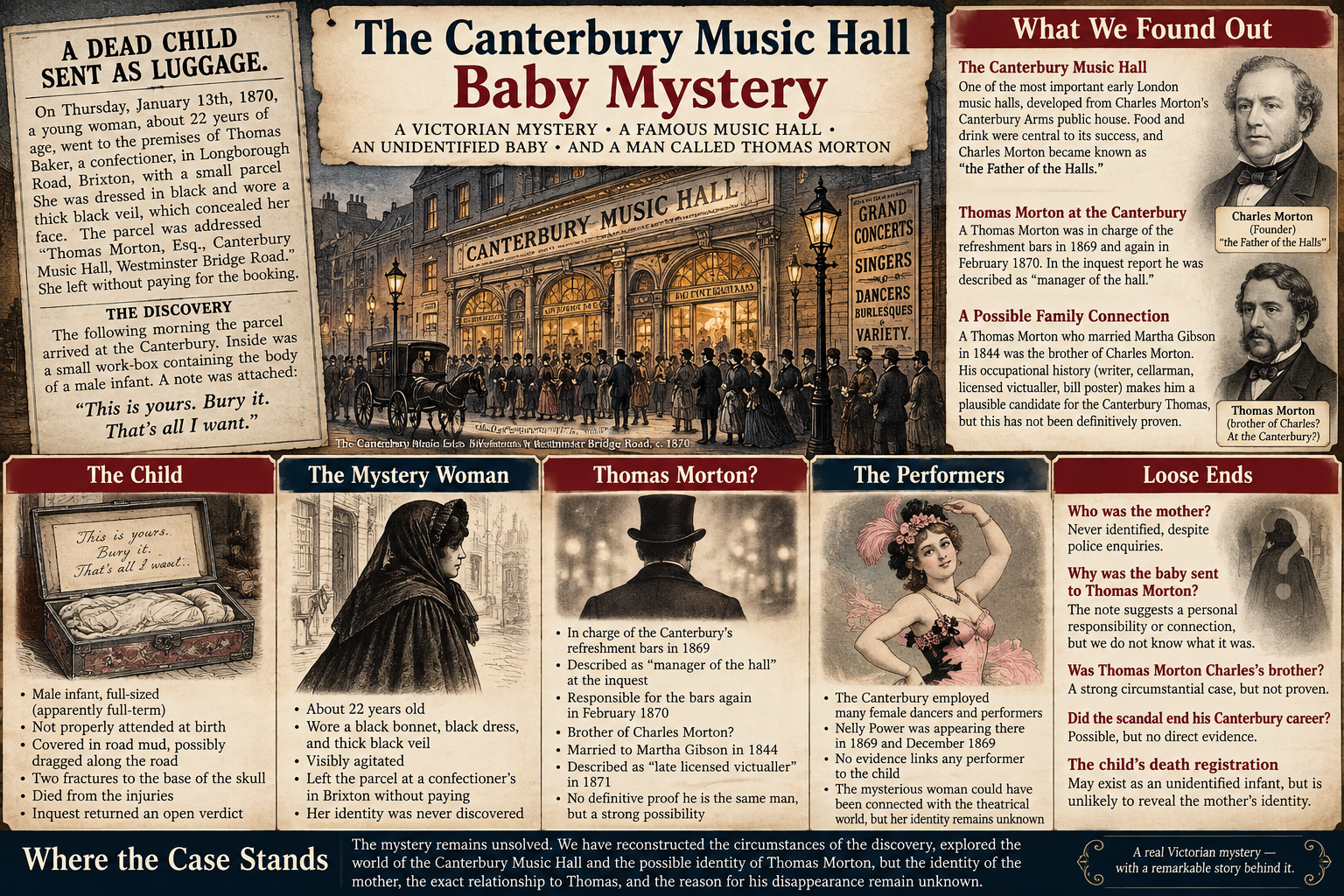
Note: All images generated by ChatGPT.