This case started with a dramatic newspaper report in the Winsford and Middlewich Guardian on 21 September 1889.
|
STRANGE DISAPPEARANCE OF A BRIDEGROOM Inquiries are being made by the Lancashire police with reference to the disappearance of a Moss Side tradesman named Edward Jones, who left home a few days after his marriage and has not been seen since. The wedding took place on the 29th August, and on the return of the couple from a short honeymoon they were welcomed home by their relatives. On the 3rd September Mr. Jones asked his wife to walk out with him. She declined on the plea that she had a headache, and her husband finally went alone, remarking that he would visit one of his brothers-in-law. Nothing has been seen of him since by any of his friends and relatives, but they have heard that his has been at Glossop and Swansea. Detectives have been engaged to trace him, but no clue has yet been found. |
At this stage, nobody knew whether Edward had deliberately disappeared or something worse had happened to him. The newspaper presents it as a genuine mystery.
A second newspaper report in the Manchester Weekly Times and Examiner of the same date, however, gave considerably more detail.
| THE MISSING MOSS SIDE TRADESMAN – No tidings have been received respecting the whereabouts of Mr. Edward Jones, who has been missing from his home in Alexandra Road, Moss Side, for a fortnight past. The relations of the missing gentleman have authorised Mr. Superintendent Bent to issue notices offering a reward of £50 for information which shall lead to his discovery. Mr Jones is describe in the notices as follows: “Aged 32; height 5 ft 7 in; black hair, parted in the centre and heavy black moustache. Dressed in black morning coat, white waistcoat and light striped trousers, and black leather button boots.” |
This newspaper articles shows how seriously his disappearance was being treated and gives us a very useful physical description. At this stage, it still looked like a straightforward Victorian disappearance – it wasn’t.
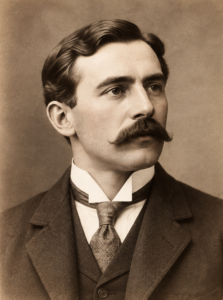 We traced Edward Jones through the census records. In 1861 he was about four years old and living with his family in Ormond Street. His father was Charles Jones, a tailor. In 1871 Edward, aged 14, was still living with the family, and his father Charles was now described as a tailor and draper.
In 1881 Edward, aged 24, was at 45 Alexandra Road, Moss Side, where he was described as a draper and, importantly, as a partner in the household/business rather than merely a visitor.
 The household included Roger Williams and his wife Susannah, and Edward’s younger brother Henry was there as a boarder, working as a managing clerk. We subsequently established that this was the business address of the Jones family drapery business.
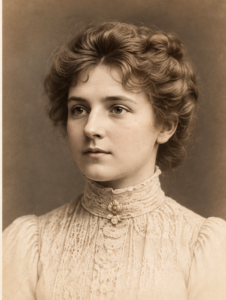
Edward’s wife was Elizabeth Ellen Elliott (aka “Lizzie”) who was born around 1858 in Stretford, Lancashire Her father was a professor of music. Both of her parents died in 1879.
In the 1881 census Elizabeth and her sisters Margaret and Henrietta were living together and all were described as teachers of music.
The next newspaper report I found was the bombshell. It was from the Manchester Courier and Lancashire General Advertised dated 14 March 1891– over 18 months later.
| DESERTION BY A BANKRUPT
Edward Jones, draper, formerly of Alexandra-road, Moss Side, and now of Clayton Bridge, whose disappearance caused some sensation in September 1889 appeared to show cause why he should not maintain his wife, for whom Mr. W. J. Widdowson appeared. The defendant was represented by Mr. Webster. Mr Widdowson applied for an order under the Married Women’s Desertion Act 1886. It appeared that the parties were married on the 14 August 1889, and after a honeymoon which lasted a fortnight, they lived together for three days, when the defendant under pretence of going for a walk, went out of the house and was not seen again by his wife until his present appearance in court. Prior to her marriage Mrs. Jones had previously been a music teacher, earning, she said, £80 a year. It was stated that the defendant was an undischarged bankrupt earning £1 a week, and that he was now earning £1 a week. An order was made for 7s 8d per week plus costs. |
So by March 1891 the original mystery of “Where did the missing bridegroom go?” was essentially solved. We knew conclusively Edward was alive. The missing bridegroom had returned to England. He had not been murdered. He had not committed suicide. He had abandoned his wife. And Elizabeth had finally tracked him down and taken him to court.
This put a different complexion on Edward’s disappearance. The newspaper reports initially created the impression that Edward might have died, but it was clear there was more to it than that. It was then important to search for newspaper articles concerning the bankruptcy, and these eventually revealed the truth.
A 16 November 1890 report in the Manchester Weekly Times and Examiner headed “THE MISSING MOSS SIDE BRIDEGROOM” reported that a date had been set at the Salford Bankruptcy Court for the public examination of Edward Jones of Alexandra Road, Moss Side who traded with his brother, Charles Jones, as Jones Bros, Drapers and outfitters.
It explained that the case had a special interest as Edward had left home on 1 September 1889 within a fortnight of his marriage and that there had initially been fears that he had committed suicide, or been the victim of foul play. But when Edward failed to appear for his bankruptcy examination, the Official Receiver applied for a warrant, and the examination was adjourned. So, we now discover that Edward’s disappearance wasn’t just a family matter — there was a substantial business and financial story behind it.
Another report on 22 November 1890 was one of the most important cuttings we found. An application was made to annul the bankruptcy. Edward had been in partnership with his brother Charles Jones and he had executed a deed of assignment dated 2 November 1889.The creditors had apparently accepted a composition of 9s 4d in the pound but the Official Receiver opposed the application, believing that Edward had more than £80 in his possession when he disappeared. The key argument was that he had deliberately left England.
Another particularly useful newspaper report dated 18 December 1890, headed “FAILURE OF A DRAPER AND OUTFITTER” stated that in March 1888, Edward and his brother had taken over the business from their father. The report gave liabilities: approximately £512 3s and assets after preferential creditors of approximately £269 2s 2d. So the business was in serious financial difficulty by the time the bankruptcy was examined. However, it recorded that Edward had believed the business was solvent and that the reason he had left the country suddenly was due to “domestic trouble”. It was confirmed he returned in October 1890.
So, what happened to Lizzie?
In the 1891 census Elizabeth was living with her siblings on Albany Road. Manchester. She was actually recorded as Lizzie Jones and her marital status was given as “widow”. We found this particularly intriguing because Edward was very much alive – and she would have known that. We can’t know whether “widow” was Lizzie’s own description, an enumerator’s error, or simply an expression of her circumstances. We joked that perhaps he was effectively “dead to her”, but we shouldn’t treat that as a historical fact.
The search for Lizzie after 1891, however, has proved elusive. In 1901 and later census records nothing convincing had emerged. It is therefore a strong possibility that Lizzie might already have left Manchester by that time.
Similarly, the search for Edward in 1891 became one of the great frustrations of the case. We systematically looked through Edward Joneses of the appropriate age in Manchester, and found several tempting possibilities.
One was a Manchester-born Edward Jones, aged 34, living with his wife, Isabella Jones, and working as a fitters’ labourer. This initially looked interesting because Openshaw is geographically close to Clayton Bridge. But we investigated Isabella and discovered she was Isabella Langham, who had married an Edward Jones in 1887. So this was definitely not our Edward.
The most likely one we found was an Edward Jones aged 36, living as a lodger in a large lodging house at 22 Charles Street with 13 other lodgers. His occcupation was a mantle cutter. This was actually quite an intriguing candidate because the clothing occupation was much closer to Edward’s drapery background. But Charles Street was in central Manchester, rather than the Clayton Bridge area, and there was no additional evidence connecting him to our Edward. We therefore left him as an interesting but unproven possibility.
Given his bankruptcy and circumstances, we considered the possibility that he was deliberately keeping a low profile, lodging elsewhere, being badly indexed, or simply being recorded in an unexpected way.
We also investigated three Chorlton deaths of Edward Joneses: one in 1892, age 36, one in 1894, aged 36; and one in 1895 aged 38
The 1895 death looked particularly promising because the age matched Edward’s birth around 1857, and FindMyPast suggested a connection to his 1857 birth registration. We obtained the death certificate. Unfortunately, it was for the Edward Jones who had married Isabella Langham. So that promising lead was definitively eliminated.
Eventually, we asked Ancestry to identify possible later records for our Edward. It returned more than 51,000 possibilities. At that point, we decided that the documentary trail had become too uncertain to continue responsibly without a new identifying clue, so it seemed it was the right time to stop.
Marriage, Respectability and the Reality of Desertion
This case offers an interesting insight into Victorian ideas about marriage, respectability and a husband’s responsibilities. Edward and Lizzie’s marriage in August 1889 appeared to begin conventionally, but within weeks he had disappeared, leaving his new wife in an extremely vulnerable position. What is particularly revealing is the contrast between their circumstances: Lizzie had been a professional music teacher earning £80 a year, while Edward was an undischarged bankrupt whose income was reported as only £1 a week. Marriage therefore did not necessarily provide a woman with greater financial security; in Lizzie’s case, her husband’s desertion left her needing the protection of the law.
The case also demonstrates the changing legal position of married women in the late Victorian period. Under the Married Women’s Desertion Act 1886, Lizzie was able to take Edward before the magistrates and obtain an order requiring him to contribute 7s 8d a week towards her support. This is significant because it shows the growing recognition that a husband could not simply abandon his wife without consequences. At the same time, the modest weekly payment illustrates how limited that protection could be. Lizzie had previously been an independent wage-earner, and the court proceedings reveal the uncomfortable reality that Victorian respectability did not necessarily guarantee economic security within marriage.
The case also illustrates the importance attached to reputation and social standing. Edward’s disappearance was initially treated as a mysterious and potentially tragic event, with his relatives involving the police and a substantial £50 reward being offered for information. Suicide or foul play were considered possible explanations; the idea that a newly married man had simply chosen to leave his wife was perhaps less readily anticipated. Once Edward returned, however, the story became one of desertion, bankruptcy and domestic failure. It is a particularly revealing example of the gap between the Victorian ideal of marriage as a stable, respectable institution and the reality that marriages could break down very quickly—and that the consequences fell disproportionately upon the abandoned wife.
CONCLUSION
The original mystery is solved. Edward Jones didn’t disappear when he was out on a mysterious walk; he left the country because he was the subject of bankruptcy proceedings. He returned to England in October 1890, and was located by Elizabeth. He then appeared in court in March 1891 and was ordered to support her. That is a remarkable story in itself.
We have deliberately not filled any gaps with attractive but unproven identifications. This case is therefore still open, rather than solved. Not because we failed to solve the disappearance — we did solve that, but because the much more interesting question turned out to be: What happened to Edward and Lizzie after 1891? And for now, the answer remains in the records somewhere — but Edward Jones is proving to be one exceptionally well-hidden Victorian man.
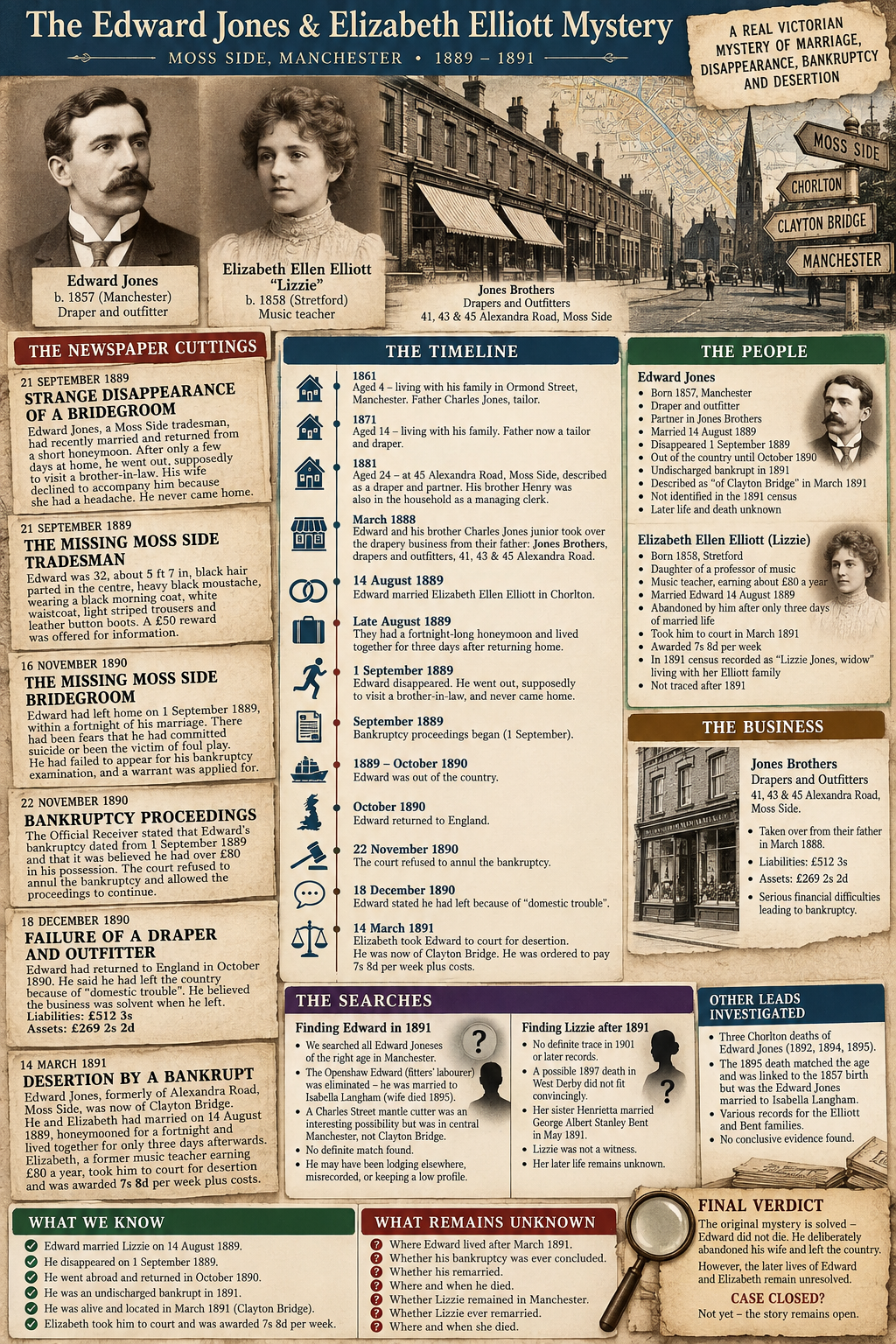
Note: All images generated by ChatGPT.