The case first came to light through a remarkable newspaper report in the Cheltenham Chronicle and Gloucestershire Graphic on 28 March 1850.
| EXTRAORDINARY CASE OF BIGAMY. – UPTON ON SEVERN – The magistrates sitting in Petty Sessions there have been engaged in adjudicating on a case of bigamy committed under very peculiar circumstances as regards the conduct of the first wife, who had adopted the habits and dress of a man, and had actually been married to one of her own sex. The accused bigamist is one, John Curtis, a labourer of the village of Strensham, the retreat of the poet, Butler; and he stands charged with having married a second wife during the existence of his first, whose maiden name was Anna Maria Wilkins, whom he married in Strensham in 1835. Curtis and his wife lived together until the year 1840, when they came to a mutual agreement to separate. Upon this separation taking place, the wife, who was of a masculine character, determined to change her condition, and forthwith she assumed male attire, and proceeded into Staffordshire, where she engaged with a farmer as a day labourer, and actually worked in the fields and guided the ploughshare. She then became a “man servant” of a gentleman, and having the appearance of a “brisk young man”, she attracted the attention of her master’s housemaid, and they were actually married, and lived together as man and wife, as everybody thought, for some years, the secret of the supposed husband’s sex being undivulged. At length, however, the housemaid, tired of her female husband married a real man, removing to a distant part of the country, while the heroine of our history remained in Staffordshire. In the mean time her real husband, Curtis, tired of single life, resolved to marry again, and he, with this bride expectant, repaired to Worcester, where they were married . The fact was very shortly afterwards conveyed to the ears of his real wife, in Staffordshire, upon which she assumed her female attire, had Curtis taken into custody, and appeared to prosecute him for bigamy. The magistrates having heard the evidence, committed Curtis to take his trial. |
It was when John Curtis tried to marry for the second time, that the whole story was set in motion. Another newspaper reported that John first attempted to marry in his own parish of Strensham, but the incumbent, the Rev. Dr Groves, refused to perform the marriage without proof that his first wife was dead. John even tried to invoke an unusual local custom under which the church bell could be tolled as if announcing the death of a missing person. That too was refused, so John and his intended bride therefore travelled to Worcester, where they were married.
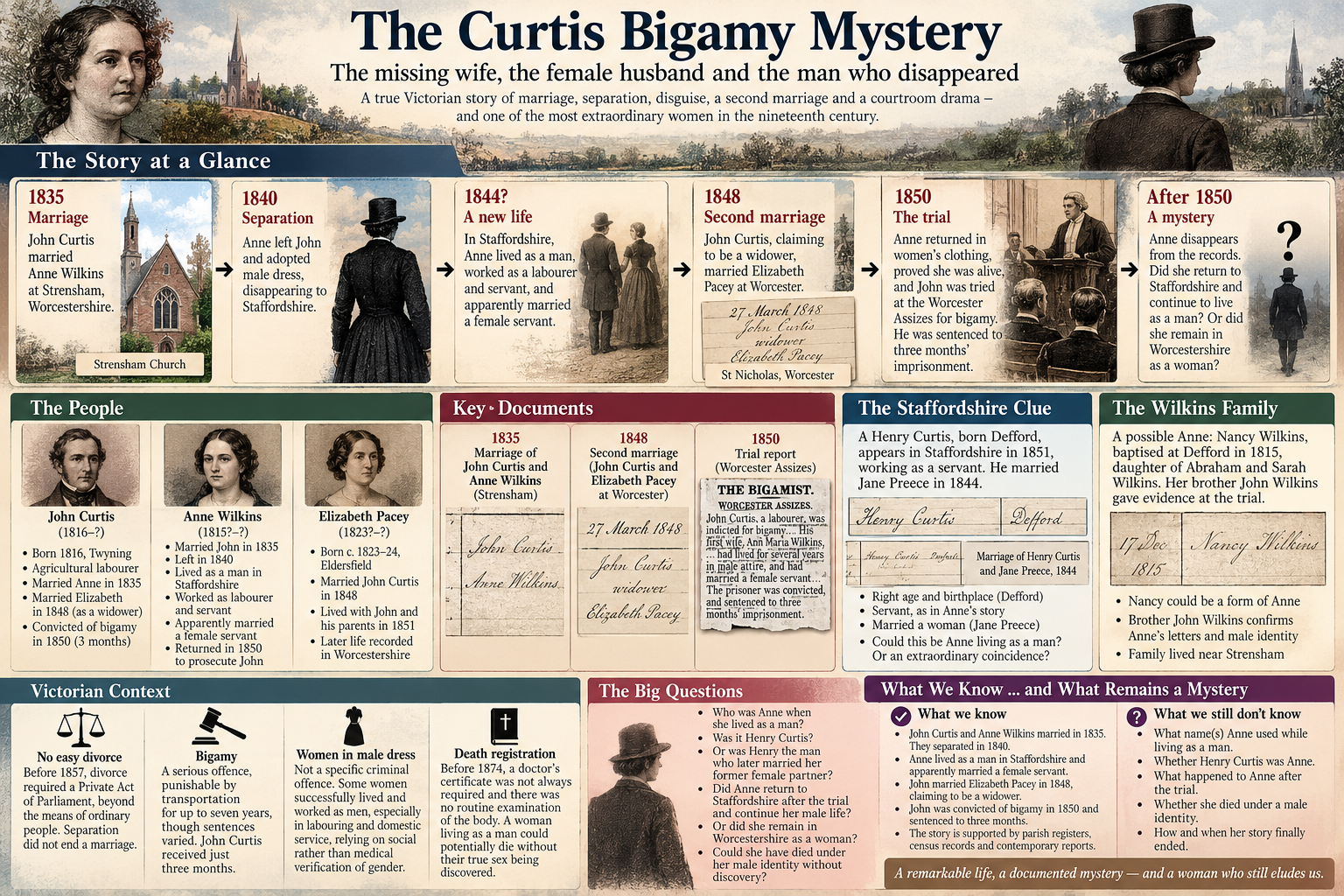
The marriage has since been found in the surviving parish register. On 27 March 1848, John Curtis, aged 31, labourer, son of Thomas Curtis, a gardener, married Elizabeth Pacey, aged 24, at St Nicholas, Worcester. Most significantly, John described himself as a widower. That single word is central to the mystery. His first wife was not dead.
Soon afterwards the news reached his wife, Anne, in Staffordshire. She put aside her male identity, appeared in women’s clothing and returned to Worcestershire, where she brought the case against her husband. The magistrates at Upton-on-Severn committed Curtis for trial, and in July 1850 he was tried at the Worcester Assizes and convicted of bigamy. The contemporary trial report records that he was sentenced to three months’ imprisonment, the jury having recommended him to mercy on account of his good character.
The Curtis family: establishing the ordinary part of the story
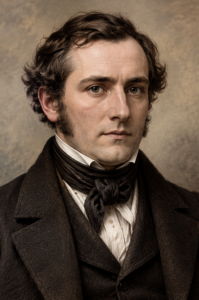 One of the most satisfying aspects of the investigation has been discovering that the newspaper’s John Curtis can be firmly anchored in the documentary record.
John was baptised at Twyning, Gloucestershire, in 1816, the son of Thomas and Ann Curtis. The family then appears consistently in the later records. In 1841, John Curtis, about 25 and an agricultural labourer, was living with Thomas and Ann Curtis at Strensham. The same Thomas and Ann were the witnesses when John married Anne Wilkins in 1835. Their presence at the wedding, together with the fact that the marriage was recorded as being with parental consent, provides a particularly strong link between the marriage certificate and the later census household.
By 1851 John was living with his second wife, Elizabeth, and again with Thomas and Ann. His age, occupation, birthplace and father’s name all correspond remarkably well across the records.
Elizabeth Pacey: the second wife
Elizabeth also became much more than simply the anonymous woman in the newspaper account. Her 1848 marriage record identifies her as Elizabeth Pacey, daughter of John Pacey, labourer. A later census gives her birthplace as Eldersfield, Gloucestershire, and her 1881 age of 57 places her birth around 1823–24, which fits the age of 24 recorded at her marriage remarkably well.
John Curtis, describing himself as a widower, married Elizabeth Pacey at Worcester on 27 March 1848. The irony is considerable. The rector at Strensham had refused the marriage precisely because Curtis could not prove the death of his first wife; nevertheless, the Worcester register records him as a widower.
Whether this was a deliberate falsehood, or whether John had convinced himself that Anne was effectively dead to him after years of separation and disappearance, cannot be established with certainty. However, the trial evidence makes the question more difficult for him, because it was reported that in 1846 he had approached Anne’s brother to ask whether he knew whether she was alive.
Anne Wilkins: the woman who became a man
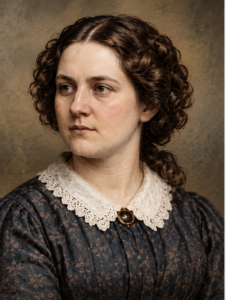 The most extraordinary figure in the case is, inevitably, Anne. The documentary evidence tells us that she left John Curtis around 1840 and thereafter presented herself as a man. The trial testimony is particularly valuable because it came from people who had actually heard about her subsequent life, including her brother John Wilkins.
Her brother stated that he had received two or three letters from her, and that she had told him that she had been living and dressing as a man. She had worked in service as a man and had married a maid. The evidence therefore suggests that Anne was not merely disguising herself temporarily in order to find work: she appears to have constructed a sustained male social identity.
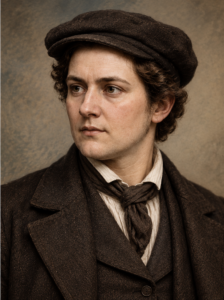 The occupations attributed to her are striking. In different reports and testimony she appears as an agricultural labourer, someone who could guide a plough, a groom or man-servant, and even a carpenter or navigator. The details vary between reports, but the broad story remains consistent: she successfully occupied male employment for years.
The description of Anne when she finally appeared in court adds another human detail. A witness described her as rather feminine in appearance but also “portly” and able-bodied. The courtroom itself apparently treated some of the evidence with amusement. This reveals something about the atmosphere surrounding the case – what was for Anne a potentially very serious matter was also being consumed by the public as an extraordinary spectacle.
The crucial clue: Anne’s brother
Perhaps the single most important discovery from the later trial reports is the identification of Anne’s brother as John Wilkins. This changed the research considerably.
John told the court that Anne had corresponded with him after leaving Strensham. Around 1846, John Curtis had gone to him and asked whether he had heard from his sister or knew whether she was alive. John apparently wanted John’s help in determining her fate. This is important because it demonstrates that John was not simply assuming that Anne had died without making any effort to find her. He knew that her whereabouts were uncertain and was sufficiently concerned to make enquiries.
For genealogical purposes John Wilkins is also potentially the key to solving Anne herself. Instead of trying to find an unknown man under an unknown name, the investigation can work backwards through the Wilkins family: who were John Wilkins’s parents and siblings, and where was his sister Anne?
The Nancy Wilkins clue
That investigation produced one of the most tantalising leads in the entire case. A Nancy Wilkins, daughter of Abraham and Sarah Wilkins, was baptised at Defford on 17 December 1815. John Wilkins, potentially Anne’s brother, also appears to have been a son of Abraham and Sarah, born around 1809.
The significance lies partly in the name. Nancy was commonly used as a diminutive of Ann/Anne, so Nancy cannot automatically be dismissed simply because the name on the baptism is not Anne.
The family is also geographically attractive. Defford lies only a little way north of Strensham, and the wider Twyning–Tewkesbury–Defford area contains a concentration of the Wilkins family.
However, the connection could not be proved. No document has yet been found showing that Nancy Wilkins later became Anne or Anna Maria Wilkins. So this remains an intriguing possibility rather than a solution.
That is typical of the case: we repeatedly find clues that almost fit, but none that closes the circle.
The Henry Curtis theory
The most tantalising theory to emerge from the research came almost by accident. Searching Staffordshire censuses for a man who might have been Anne living under an assumed identity produced a Henry Curtis, aged about 34 in 1851, working as a servant in Tipton and giving his birthplace as Defford. This immediately looked extraordinary.
The newspaper tells us that Anne went to Staffordshire, lived as a man, worked as a servant and eventually married a female servant. Here was a male Henry Curtis, of the right general age, born in precisely the Worcestershire locality associated with one of our possible Wilkins families, living in Staffordshire and working as a servant.
And there was a marriage. On 3 November 1844, a Henry Curtis, labourer, married Jane Preece at Kidderminster, by banns. Jane had been baptised in Bridgnorth in 1803 and could subsequently be followed as Jane Curtis. By 1871 she was living in Tipton as a 68-year-old widow, born Bridgnorth, which fits her remarkably well.
This creates two possible interpretations.
The first is extraordinary: Could Henry Curtis actually have been Anne Wilkins living as a man?
The second is much simpler: Could Henry Curtis and Jane Preece simply have been an entirely ordinary couple whose lives happen to intersect remarkably closely with the Curtis story?
At present, we cannot decide.
The most troublesome evidence against the Henry-as-Anne theory is the 1844 marriage entry, where Henry gives his father as John Curtis, labourer and himself as a bachelor. No convincing baptism of a Henry Curtis, son of John Curtis, has yet been found despite a broad search. This keeps the possibility alive, because an assumed identity might naturally leave no childhood records under the adopted name.
But other evidence points the other way. Jane can apparently be followed as Henry’s widow, and a Henry Curtis died in Tipton in 1869. The precise linkage between that death and the Henry of the 1844 and 1851 records remains imperfect because of discrepancies in the ages.
At present, therefore, Henry Curtis remains a tantalising theory rather than an identification.
What happened to Anne after the trial?
This is perhaps the greatest unanswered question. The newspaper story gives us the dramatic public ending: Anne appears in women’s clothing, proves that she is alive and causes John Curtis to be prosecuted. But what happened next is unknown.
There are at least two plausible possibilities.
She returned to life as a woman: She might have abandoned the male identity, returned to the Worcestershire area, and lived thereafter as Anne.
She returned to Staffordshire as a man possibly even living her life as Henry. This is equally plausible, perhaps more so. If living as a man had become the life she preferred — or simply the life that gave her independence, employment and a social existence unavailable to her as a separated married woman — there is no obvious reason why the court appearance had to represent a permanent return to female life.
Her appearance as Anne may have been a short-lived strategic necessity. To prove that John Curtis’s first wife was alive, she had to establish herself publicly as that wife. Once John had been convicted, she could theoretically have returned to Staffordshire and resumed the identity under which she had lived for the previous decade. This would also explain why she disappears so completely from the subsequent documentary record.
Could Anne have died under her male identity?
This is another fascinating aspect of the case. It is tempting to assume that a person living as a different sex would inevitably be discovered when registering their death. That was not necessarily so.
The English death-registration system of the mid-nineteenth century was much less medically rigorous than it is today. The 1836 system did not require every cause of death to be certified by a medical practitioner. Parliament later described the 1874 legislation as tightening significant loopholes in the earlier system.
By 1874, a doctor who had attended someone during their last illness was required to provide a medical certificate giving the cause of death; nevertheless, this was a certification of the cause of death, not a statutory requirement for a post-mortem examination of every body.
Consequently, if Anne had continued to live successfully as a man and died of an ordinary illness, there is no reason to assume that the death certificate would necessarily reveal her biological sex. A doctor familiar with her as a patient might never have had occasion to discover it, while the registrar depended heavily upon the information supplied by an informant.
This does not mean that Anne could certainly have died under a male identity without discovery. A physical examination, illness requiring intimate treatment, suspicious circumstances or a coroner’s investigation might have exposed the truth. But there was no universal system requiring an examination of the body simply because a person had died.
That makes the later disappearance of Anne particularly intriguing: her documentary trail could end under either a female or a male name, and we have no way yet of knowing which.
Victorian views of bigamy
Marriage without divorce: the trap behind the crime. John Curtis’s story needs to be understood against an important background: in 1850 separation was not divorce.
Before the Matrimonial Causes Act of 1857, a full divorce which allowed either party to remarry generally required a Private Act of Parliament. Only a very small number of such divorces were obtained, and the expense meant that the process was effectively restricted to the wealthy. A judicial separation could be obtained in appropriate circumstances, but it did not make either spouse single or permit remarriage.
This explains the central legal problem in the Curtis case. Anne and John could separate by mutual agreement and live entirely separate lives, but the marriage remained legally in force. The contemporary trial consequently illustrates a very real Victorian problem. A working couple might have abandoned a marriage in every practical sense but remained married in law. Yet if either later attempted to marry someone else, the second marriage could amount to bigamy.
That background should not be confused with an excuse for bigamy. The law remained clear that a living spouse prevented a second lawful marriage. What it does explain is why bigamy could arise from circumstances that were very different from the modern stereotype of someone deliberately maintaining two simultaneous families.
Indeed, the difficulty of divorce formed part of contemporary criticism of the law. Parliament itself acknowledged that the inability of separated people to remarry was an old grievance, and the 1857 reform was intended in part to remedy it.
Anne had apparently escaped her marriage in every practical sense, but John could not escape it legally. Anne’s own “marriage” could exist socially for years, yet it had no equivalent legal force. And when John finally tried to behave as though his marriage were over, Anne returned to insist that it wasn’t. That is the real story behind the sensational cutting.
Was bigamy normally treated leniently?
This is where our discovery of John’s sentence is particularly valuable. It would be misleading to say that Victorian judges simply regarded bigamy as a trivial offence because divorce was expensive. The potential punishment was serious. A statute of 1795 allowed judges to sentence bigamists to seven years’ transportation. Contemporary parliamentary debate shows that some politicians considered this a very severe punishment, but also that transportation was used particularly in cases regarded as especially flagrant.
Modern research has challenged the assumption that bigamists were generally treated with leniency. Rebecca Probert and Liam D’Arcy-Brown identified more than 250 people sentenced to transportation for bigamy between 1795 and 1853, demonstrating that severe punishment was a real feature of the period. They also show considerable variation in sentencing and in the circumstances which attracted the harshest penalties.
Against that background, John’s three-month sentence is notable. He had been convicted, but the jury recommended him to mercy because of his good character. His case was therefore treated differently from the aggravated bigamies which attracted transportation.
That contrast is particularly useful because it prevents the case from being reduced to a simple moral tale. John was legally guilty, but the jury evidently regarded him as a man whose character and circumstances merited considerable mitigation.
The case therefore illustrates two Victorian attitudes operating simultaneously: bigamy was regarded as a serious offence because marriage was legally binding, yet the courts could distinguish between different kinds of bigamist and exercise considerable mercy.
Women, male clothing and the “female husband”
Anne’s story also needs to be treated carefully from a legal and social perspective. There was no simple general criminal offence in 1850 of a woman wearing men’s clothing or living socially as a man. Nor was female same-sex intimacy itself defined as a specific criminal offence in English law. Earlier cases involving “female husbands” demonstrate that when authorities intervened, they sometimes had to find other offences through which to prosecute the conduct. In the famous eighteenth-century case of Mary/Charles Hamilton, for example, the prosecution proceeded under vagrancy legislation rather than through a specific offence of being a woman living as a man or engaging in a relationship with another woman. That is extremely relevant to Anne.
Her supposed marriage to the housemaid was not equivalent to John’s bigamous marriage to Elizabeth. If Anne was biologically female, the Staffordshire ceremony did not create a normal legally recognised marriage between husband and wife. Yet the absence of a straightforward criminal offence also meant that her conduct did not automatically lead to prosecution.
This helps explain one of the strangest aspects of the entire case: Anne appears as the prosecuting wife in 1850 rather than as the accused person. The legal system was interested in John’s second marriage because it was a marriage that the law recognised as potentially valid. Anne’s supposed marriage to another woman was a different kind of problem altogether.
The extraordinary social achievement of Anne’s disguise
One of the strongest themes running through the evidence is simply how successfully Anne negotiated the male world. She was not merely putting on men’s clothes for an occasional adventure. The reports describe someone who travelled, worked, entered domestic service, formed relationships, attracted a female partner, married her after the publication of banns and lived with her for years without the supposed husband’s sex being discovered.
That tells us something important about nineteenth-century society. Gender identity in everyday life was often socially verified rather than medically verified. A person’s clothing, occupation, speech, behaviour, reputation and relationships could be more important to those around them than any physical examination. Someone who could convincingly inhabit the expected social role of a man could potentially move through the world without their sex being questioned closely.
Anne’s employment is crucial here. A male labourer or servant was expected to be physically capable, mobile and economically productive. There was no bureaucratic identity system requiring everyone to produce a birth certificate proving their sex before taking a job or renting accommodation. Her success therefore depended not on fooling a single individual but on sustaining a social identity across a network of people. That makes the story remarkable even before the issue of the marriages is considered.
A Victorian newspaper story — and its limitations
The original cutting is itself part of the mystery. The language is intensely theatrical. Anne is the “heroine of our history”; her supposed male identity is described a “brisk young man”; the circumstances are reported as both extraordinary and amusing. Different newspapers add slightly different pieces of information, and even Anne’s name varies between Anne, Ann and Anna Maria Wilkins. The reports are therefore valuable but need to be treated critically.
The trial reports are more useful than the initial sensational accounts because they contain evidence given under oath and show the questions put by the defence. Yet even these are journalistic summaries rather than verbatim transcripts. This explains why the case has remained so difficult to reconstruct. The newspaper tells us what happened, but repeatedly withholds the very information a genealogist most needs.
Most frustratingly, the reports never give us the male name Anne adopted. That one missing name could have transformed the investigation.
CONCLUSION
The research has therefore produced an unusual outcome. We have been able to turn much of a sensational newspaper story into a documented genealogy. We have reconstructed the legal sequence from the failed attempt to marry at Strensham to the second marriage at Worcester and the subsequent prosecution.
Yet the central mystery remains. Who was Anne Wilkins when she was living as a man? Could she have been the mysterious Henry Curtis? Did she live out her life in Staffordshire as a man, perhaps even dying under her adopted identity? Or did the experience eventually end and did she return permanently to life as a woman? We cannot answer those questions from the evidence currently available.
And perhaps that is what makes this case so satisfying. We have not failed to solve the mystery; we have discovered exactly where the documentary trail breaks. The woman who spent a decade successfully concealing her identity has, in a sense, continued to conceal it from us for another 176 years. For now, Anne Wilkins remains the missing piece — the woman who became a man, married a woman, returned as a wife to expose her husband as a bigamist, and then disappeared from the historical record once more.
Note: All images generated by ChatGPT