The dramatic starting point for this mystery was a report in the Northern Star on 23 November 1850.
| ELOPEMENT EXTRAORDINARY.
The inhabitants of the town of Bury have been thrown into a state of unusual excitement, in consequence of a medical gentleman, of extensive practice in his profession, and of considerable literary attainments, having suddenly disappeared from the town and neighbourhood. Various conjectures were entertained and expressed relative to the cause of his unexpected absence; some attributing it to his having business in London, others to the indulgence of a capricious whim, while others were suspicious that circumstances of a more serious character would shortly be disclosed. The latter opinion proved to be the most correct, for in a short time the Rev. Mr. Bell, Wesleyan minister in the Southport circuit, received the distressing intelligence that his daughter, who was governess in a respectable seminary in the neighbourhood of Southport, had suddenly taken her departure without giving previous notice of her intentions; and as a gentleman had been observed in the neighbourhood of the establishment whose conduct had excited suspicion, there was reason to fear that an elopement had taken place. A combination of circumstances proved that the suspicion was not without foundation; for the family of the medical gentleman, consisting of a wife and four children, were soon made sensible that the husband and father had sacrificed “home and its relations” by “seducing” the daughter of a Wesleyan minister, with whom the family had been for some years on terms of intimacy. During a period of two months previous to the gentleman’s departure this lady had been enjoying the bracing air of one of the watering-places in the northern division of Lancashire, and on her return home she had the mortification to find that her husband had on that very morning taken his departure for London, having previously disposed of his cattle, &c., as a means of increasing the amount of money in his possession. In London the gentleman, whose name is Thomas Hatton Wardleworth, sold his professional practice to Mr. Fletcher, surgeon, and gave him instructions to go immediately to Bury and take possession. Mr. Wardleworth is known as an author, and as one of the proprietors of the Bury Observer, a monthly magazine, having an extensive circulation in the locality. Several articles from his pen have recently appeared, entitled, “Home and its Relations: by a Medical Man.” |
To summarise then, Thomas Hatton Wardleworth, a Bury medical man with a wife and four children, allegedly eloped with the daughter of a Wesleyan minister, sold his professional practice, travelled to London with her, and was the subject of considerable newspaper gossip.
The aim was to find out more about Thomas Hatton Wardleworth and identify the daughter of the Wesleyan minister, and what happened to them both after the elopment.
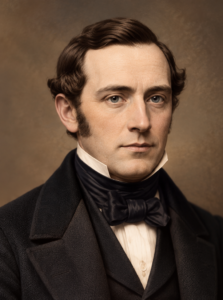 We established that Thomas Hatton Wardleworth was a surgeon, and found good evidence for his professional identity and background.
His father was also called Thomas Hatton Wardleworth, and was a surgeon in Bury. The 1850 Bury directory lists father and son separately — the senior at 5 Union Square and the junior at 10 Henry Street.
Thomas junior had a medical/scientific interest beyond ordinary practice: he published An Essay on the Chemical, Botanical, Physical, and Parturient Properties of the Secale Cornutum in 1840.
Thomas’s first wife was Ann Standring, whom he married in Bury on 4 July 1837 and they had four children – Samuel, Sarah, Thomas and Annie.
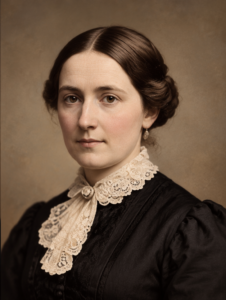 From census records we established that the daughter of the Wesleyan minister, Thomas Hatton Wadsworth seduced was Ann Rogers Bell, born on 1 October 1824 in Manningtree, Essex, the daughter of the Wesleyan minister, Rev. John Bell and his wife, Ann Rogers.
Ann Rogers Bell can’t be found in the 1851 census but, interestingly, only a few months after the sensational newspaper story, Thomas was living at Lower Town, Sampford Peverell, Devon with his wife, Ann and his four children, the youngest of whom, Annie Eliza, was born in Bury in September 1850 – so only a few months before the sensational newspaper article that reported Thomas’s elopement.
However, Thomas must have returned to Lancashire some time after that and re-kindled his affair with Ann Rogers Bell because she had a son in Stockport on 17 March 1853 whom she called John Bell Wardleworth – although no father’s name was given on his birth registration.
On 17 October 1857 Thomas was appointed medical officer for Lowestoft, Suffolk, and, in fact, when his wife, Ann, died on 8 August 1858, aged 42, at Oakenrod Hall, Rochdale, her administration was granted to Thomas Hatton Wardleworth, whose address was given as 6 Nelson Street, Lowestoft.
Two months later, on 8 December 1858 Thomas married Ann Rogers Bell in St Giles, Norwich. Thomas was 42 and Ann was 34.
Thomas was clearly practising medicine in Lowestoft as he appears in the Medical Register there. I also found an 1859 manslaughter inquest involving Emily Flowerday, where Thomas gave evidence as a surgeon and described himself as being in practice in Lowestoft.
So after the extraordinary events of 1850, Thomas had not disappeared from respectable medical life. He had established himself professionally in Lowestoft.
In early 1860 Thomas and Ann had another son, Theophilus Hatton Wardleworth whose birth was registered in Lowestoft.
But later that year on 2 September 1860 Thomas died aged 45, at Heigham Hall Asylum, Heigham. This was a private lunatic asylum. I couldn’t find the Heigham Hall admission register – it’s likely it wasn’t preserved – so I don’t know when he was admitted or why he was there.
Thomas’s will was proved in September 1861 by Ann Rogers Wardleworth, who was his sole executrix. His estate was less than £200.
Earlier that year, at the time of the 1861 census Annie R Wardleworth, a widow, aged 36 was living in Seppings Buildings, Heigham Norfolk with her two sons, John Bell Wardleworth (9) and Theophilus Hatton Wardleworth (1) and a servant.
But this is where the story becomes much more interesting again. Ann Wardleworth then has two further children, and where the real unanswered questions arise.
Edward William Bishop Wardleworth was born in September 1863 but died only a few months later, on 29 January 1864. due to convulsions. No father’s name was entered on his birth certificate, but it is nonetheless intriguing because of his registered name. Family tradition says that the father was believed to be Rev. William Bishop, the married curate of Heigham and chaplain of Heigham Hall. If this was the case, then Rev. William Bishop was still living with his wife, Elizabeth, in the 1871 census, so the relationship between Edward and Ann did not progress any further.
Ann’s next child was Isabella Blanche Everett Wardleworth, who was born on 9 October 1870, and once again the father’s name was blank on the birth certificate. But the 1871 census puts baby Isabel B.E. Wardleworth (aged 5 months) in the household of William Wilson Everett, aged 44, a friendly society agent, in Heigham, together with Ann Rogers Wardleworth, aged 44, who was working as his housekeeper, and her son, Theophilus Wardleworth, aged 11. Also there were William’s two children, Fred, aged 16 and Edith, aged 13. In 1871 William Everett’s wife, Harriet, was a visitor in Lakenham, and by 1881 she was living separately from him.
So this seems to suggest Ann had (at least) two relationships with married men that resulted in children.
In the 1881 census Ann had moved away from Norfolk, and was living in Everton, Lancs, aged 56, a sempstress, with her son Theo, aged 20, a commercial clerk, and her daughter, Blanche, aged 10.
In the 1891 census they were still living together, but now in Liscard, Birkenhead. Theo, aged 31, a commercial clerk, was now the head of the household, Annie R was aged 66, and Isabelle B was 19. She was a daily governess – essentially a private teacher who went into a family’s home during the day rather than living with the family as a resident governess. That suggests she had received a reasonably good education herself. She would typically have been teaching children reading, writing, arithmetic, perhaps French, music, drawing, needlework, etc., depending on her training. It’s interesting to note that she had exactly the same role as her mother did in the 1850 newspaper cutting.
Annie died in early 1899 aged 73, and in 1901 Theo, aged 41 and now a dry chemical salesman) and Isabelle aged 27, were still living together in Liscard.
CONCLUSION
So, when you stand back, this is what makes the case so compelling. Ann Rogers Bell was the daughter of a Wesleyan minister who became involved with a married surgeon with four children and eventually married him after his first wife died. Then, after Thomas died comparatively young, Ann subsequently had two more children with blank fathers on their birth registrations. She seems to have been be quite the seductress – so maybe it wasn’t Thomas who seduced her as the 1850 newspaper article suggested, after all.
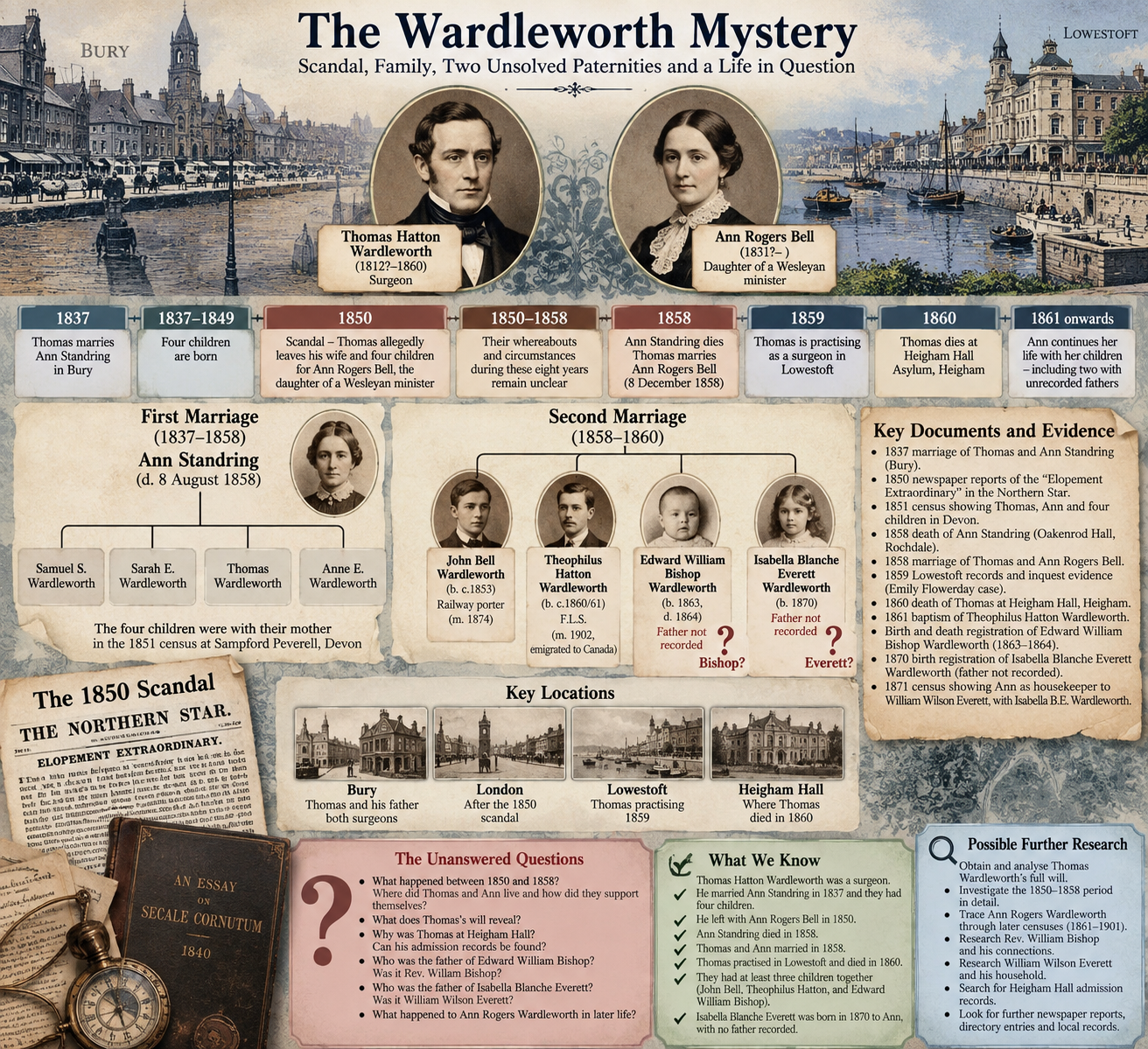
Note: All images generated byChatGPT