This case began with a newspaper report in the Seaham Weekly News, and Seaton, Murton, Hetton, Rainton, and Houghton-Le-Spring Advertiser on 8 September 1865.
|
AN AUNT AND NEPHEW: STRANGE DISAPPEARANCE An application was made the other day to the presiding magistrates, at the Huddersfield Court-house by Mr. Freeman, on behalf of Mary Ann, the wife of Samuel Eastwood, greengrocer, Huddersfield, for an order under the Matrimonial Causes Act to protect her earnings from her husband. The application was made in consequence of the disappearance of Samuel Eastwood, who is supposed to have eloped with his aunt and gone to Australia. The circumstances connected with the affair appear to be as follows: – Some few months ago Jonathan Eastwood, uncle to Samuel, was brought before the Huddersfield Bench for brutally assaulting his wife with a coal rake, and the bench marked their sense of his conduct by sending him to Wakefield House of Correction for six months. Since then the nephew has been assiduous in assisting his aunt to conduct her business, and he and his wife went to live with her, but quarrels arose between the females, which, it is said, led to her again living apart. The nephew of the incarcerated man, however, continued to aid his aunt in business matters, and in consequence of the attention he appeared to pay to the welfare of a rival in business and also through his aunt mistaking another person for him, clasping him in her arms, and addressing his as “Sam”, some parties began to entertain an opinion that there was more than a friendly feeling of relationship existing between them. About a fortnight ago Samuel intimated to his wife that he should visit the Dublin Exhibition, and when he returned he would take her into Scotland for an out. He left home on the 18th August, and has not been seen since by any of his friends in this locality. The elder Mrs. Eastwood, having given it out that she was going to purchase fruit, also disappeared, and as she did not return inquiries were made, which resulted in the discovery that she and her loving nephew had taken a goodly quantity of luggage and a very considerable amount of money, approaching £2,000. It was alleged that there was scheming on the part of both the parties to obtain the money and it was effected thus: Samuel was at the railway station at Huddersfield some time last year on business connected with his trade, and being lame, was struck, and as he alleged, severely injured by some wagons which were being shunted. He sued the London and North-Western Company, and a sympathising jury awarded him £1,500, to the great astonishment of all who knew him. The money was placed in the bank, and before he went to “Dublin”, he drew some £1,200 out so that he would not be short of money on his excursion. Eastwood, the uncle, now sojourning in the House of Correction, had money in the bank, and his wife, desiring “to extend the business”, sought for his signatures to enable her to draw it out. She also sought for the signatures of the committing magistrates to a requisition for the commutation of her husband’s term of imprisonment. In both cases she was successful. What became of the requisition does not appear – perhaps it enabled her to obtain the other signature – but the other document was used to obtain all the money her husband had in the bank except £20. When the parties had been missing long enough to give rise to the suspicion that they had eloped, Ex-detective Partridge was set on their track, and according to the statement made in court on Saturday, the parties had been traced to Queenstown, and were supposed to be on their way to Australia. In the evidence given by Mrs. Samuel Eastwood, in support of the application, she stated that she was married at Almondbury Parish church, on the 5th of November 1860; her husband left her on the 18th of August last, and had eloped with another man’s wife. The order of protection was given. |
In summary: This extraordinary story concerns the disappearance of Samuel Eastwood with his uncle’s wife, Mary Eastwood, and the belief that the pair had gone to Australia.
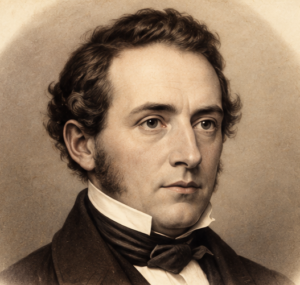 First of all, we wanted to identify Samuel Eastwood. In the 1861 census Samuel Eastwood, aged 26, was a greengrocer living with his wife, Mary Ann Eastwood, aged 28, and his sister-in-law, Ada Horsfall, 22, sister-in-law.
The crucial clue was that Ada’s surname led us to find the marriage certificate of Mary Ann Horsfall and Samuel Eastwood which took place on 5 November 1860. We also discovered that their daughter Clara Eastwood was born on 15 October 1861.
We then traced Samuel’s family. He was born around 1836/7 the son of William and Hannah Eastwood, and in the 1841 census he was living in Miles Bridge, Almondbury with 3 siblings. In the 1851 census, Samuel was a young mule piecer, while his father William was a labourer. And as we know, by 1861 he had become a greengrocer.
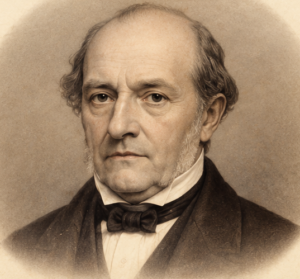 We found Samuel’s uncle, Jonathan Eastwood, the brother of his father, William. He had married Mary Leece on 15 December 1851 in Manchester, James was aged 35, a bachelor, and greengrocer and Mary was 21. (This meant that Mary was only about 6/7 years older than her Jonathan’s nephew, Samuel – so not a big age difference as the title of the newspaper article might have implied.)
In 1861 Jonathan and Mary were living on King Street, Hudderstreet, the same street as Samuel and Mary Ann, although at the other end. Jonathan owned a greengrocery business – so there was a family connection in the trade as well.
The 1865 newspaper says that Jonathan had previously been imprisoned for six months at Wakefield House of Correction after brutally assaulting Mary with a coal rake. After this, Samuel apparently helped her with her business. The newspaper says that Mary and Mary Ann eventually quarrelled, and Mary returned to living separately.
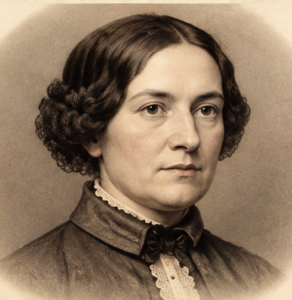 The 1865 newspaper report also gives us the sequence of their extraordinary disappearance. Samuel told his wife that he intended to go to the Dublin Exhibition, and left home on 18 August 1865 and disappeared. His aunt, Mary Eastwood said she was going out to buy fruit, and also disappeared. They had apparently taken a quantity of luggage and nearly £2,000 with them.
The money trail is one of the most intriguing parts of the story. Samuel had previously been injured in a shunting accident at Huddersfield railway station. He sued the London & North-Western Railway and received £1,500 damages. He deposited the money in the bank and withdrew £1,200 before going to Dublin. Jonathan also had money in the bank. The newspaper says Mary wanted to extend the business and obtained his signature in connection with withdrawing the money while he was imprisoned. She also sought signatures from magistrates relating to a possible commutation of Jonathan’s sentence. The newspaper says that another document was then used to obtain almost all the remaining money, leaving only £20. So there appears to have been a substantial financial motive/opportunity surrounding the disappearance.
Once Samuel and Mary had been missing long enough to cause suspicion, ex-detective Partridge traced them to Queenstown. We established that the Queenstown referred to in the 1865 newspaper was almost certainly Queenstown, County Cork, Ireland, i.e. present-day Cobh. The newspaper said they were supposed to be on their way to Australia. Crucially, it does not say that they actually sailed to Australia. That distinction is important. Our working sequence is therefore: Huddersfield → Dublin → Queenstown → with the intention to go onto Australia – but we haven’t yet established the final leg.
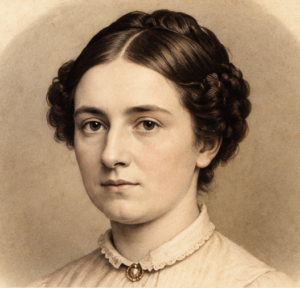 A major research discovery was uncovering a divorce petition. Samuel’s wife, Mary Ann had filed a petition in the Court for Divorce and Matrimonial Causes on 30 April 1869 – Case 1149. It made extensive allegations against Samuel, including repeated physical cruelty between 1862 and 1865:
- February 1862 — he struck her in the face and tore her clothes
- March 1863 — he threw several blows and forced her out of the house
- about a week later — he threatened her life
- July 1863 — he threw a boot at her head
- May 1865 — he struck her and knocked her head against the side of the house
Most dramatically, Mary Ann alleged that between November 1864 and August 1865, Samuel committed what the petition calls “incestuous adultery” with Mary Eastwood, “the lawful wife of Samuel’s uncle”. It further alleged encounters at Mary’s residence, the Wellington Hotel, in Stockport, in Dublin and elsewhere.
We also established that “incestuous adultery” had a specific legal meaning in the 19th century: the relationship was treated as adultery within the prohibited degrees of affinity, even though Mary wasn’t Samuel’s blood relative.
The petition also alleged that Samuel committed adultery with another unidentified woman. These are, of course, allegations contained in the divorce petition, not proof that every allegation occurred.
Interestingly, it seems a divorce was never obtained as there are no dates for a decree nisi or decree on the front page. Why was that?
We then found a very important later record. On 24 July 1871 Mary Ann Eastwood married John Batty at Huddersfield Parish Church. The marriage records Mary Ann as a widow.
That makes Samuel’s fate particularly important. However, we haven’t yet found Samuel’s death record. We therefore shouldn’t say that we’ve proved that he died — only that Mary Ann was describing herself as a widow. And it is important to add that in the Victorian era, bigamy was not uncommon, particularly following desertion by a husband, but the fact that the divorce was not obtained seems to suggest that Samuel may well have died around that time.
As for Samuel’s uncle, Jonathan Eastwood, his story became increasingly sad. In 1871 Jonathan was living alone on King Street, and in March 1879 he was in HMP Wakefield’s. He was described as about 63, born in Huddersfield a greengrocer, Church of England. He was discharged in April 1879. The offence was apparently drunkenness, with a previous conviction noted. He was clearly on a downward slope as later that year November 1879 Jonathan died in Lockwood Union Workhouse.
We still don’t know what happened to Samuel and Mary. Because the newspaper specifically says they were supposedly going to Australia, we started looking for them there, but there were no positive leads.
We then started investigating shipping from Queenstown, and found a particularly interesting Queensland-bound vessel, the Bayswater. The Queensland shipping material records a Bayswater arriving in Queensland on 13 September 1865, having travelled from Liverpool via Queenstown. That makes the Bayswater a serious hypothesis, but absolutely not yet a proven connection. We discovered that CQUniversity has a manuscript collection: MS X4/590/18 — Migrant ship passenger list. The catalogue specifically describes the Bayswater list as: “ports and dates unknown; list appears complete”. So an actual surviving passenger list does seem to exist.
The Queensland State Archives also points to surviving immigration registers and digitised material, including the relevant 1865 records. There are also National Archives passenger-list records which may allow us to examine the actual arrival material even if the people weren’t assisted immigrants. This matters because Samuel had £1,200 in cash available, so we cannot assume he travelled as an assisted emigrant and therefore cannot treat an absence from an assisted-immigration index as proof that he wasn’t on the ship. The one piece of evidence that could suddenly move the whole case forward is possibly sitting in an archive in Queensland. But we’ve reached the right point to pause the case.
Victorian Attitudes to Kinship, Marriage and “Incest”
One of the most revealing aspects of the Eastwood case is that the relationship described in the 1869 petition as “incestuous adultery” was not incest in the modern sense. Samuel Eastwood and Mary Eastwood (née Leece) were not related by blood. Mary was Samuel’s aunt by marriage, being the wife of his uncle Jonathan. Yet Victorian law regarded certain relationships created through marriage — known as affinity — as sufficiently close to place them within the prohibited degrees of marriage. Under the Matrimonial Causes Act 1857, “incestuous adultery” was specifically defined to include adultery with a woman whom a man could not lawfully marry because she was within the prohibited degrees of consanguinity or affinity.
This tells us something important about Victorian ideas of family. Marriage did not simply create a private relationship between two individuals; it created a network of legally and socially recognised kinship. A wife could become, in law and in society, as much a part of her husband’s family structure as a blood relative. The relationship between Samuel and Mary therefore crossed a boundary that Victorians regarded as particularly serious, even though there was no biological connection. Parliamentary debates surrounding the 1857 Act show how strongly legislators regarded relationships within the prohibited degrees, discussing them in terms of morality, family honour and the protection of marriage.
The language used in the Eastwood petition is therefore revealing in itself. Calling the alleged affair “incestuous adultery” immediately placed it in a category far more serious than an ordinary adulterous affair. It suggested not merely a betrayal of Mary Ann, but a violation of the wider family relationship created by marriage. This helps explain why the newspaper could present the story as such an extraordinary scandal: the alleged relationship crossed two Victorian boundaries at once — adultery between a husband and wife, and sexual relations within a relationship of affinity that Victorian law treated as akin to incest.
CONCLUSION
We’ve gone from a single sensational newspaper story to a well-documented family structure, marriage, child, financial trail, court petition, disappearance, geographical trail to Queenstown, and a potentially matching Australian voyage.
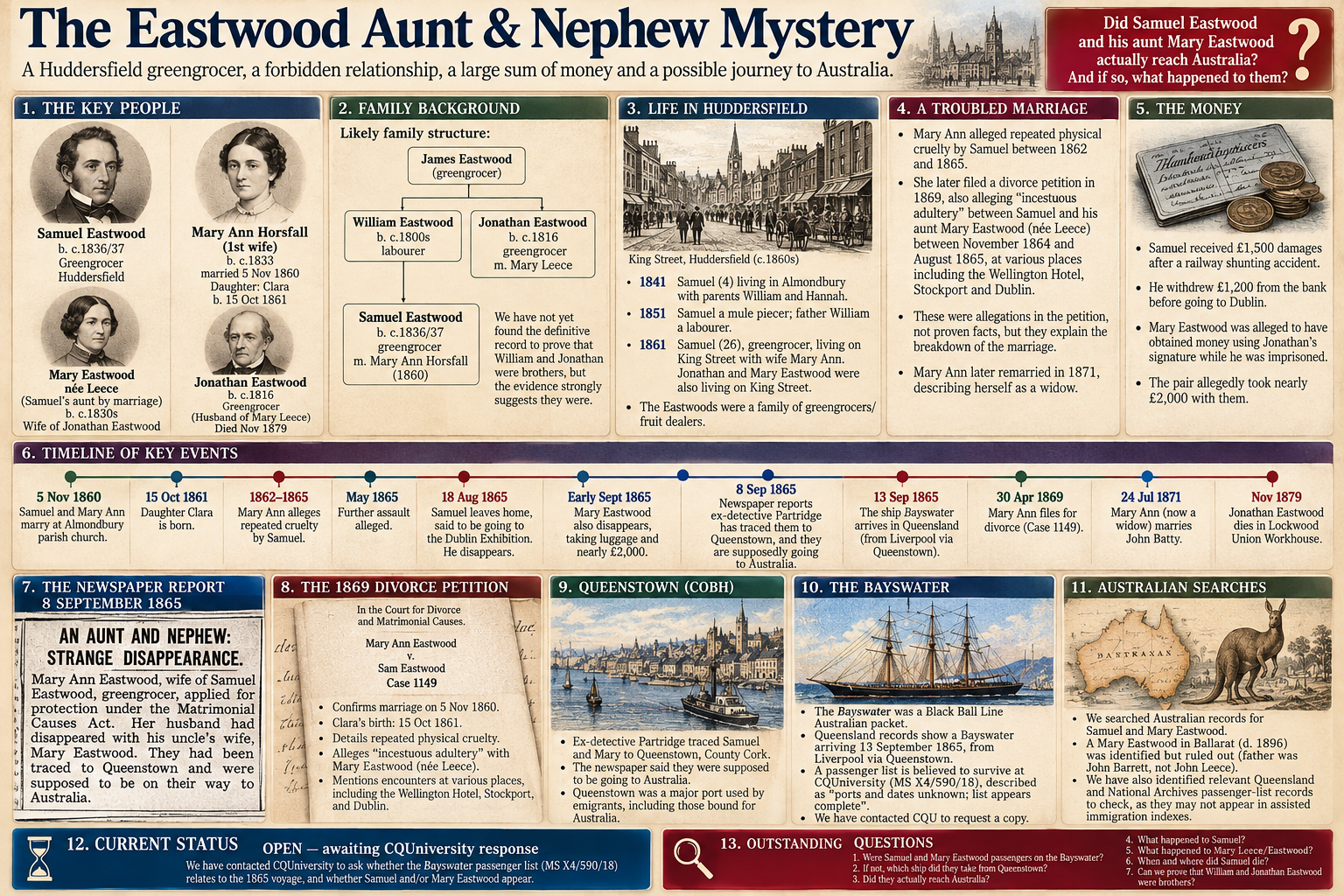
Note: All images generated by ChatGPT.