This case began with this newspaper cutting in the Manchester Courier on 8 November 1890.
|
AN OXFORD PROFESSOR SHOT BY A LADY. An extraordinary affair happened at Oxford on Thursday night. Shortly after five o’clock a lady called at the residence of the Master of University, Dr. Frank Bright, and asked to see someone who was stopping in the house. She was informed that the person inquired after could not see her, and she inquired for Miss Bright with the same result. The Master of University, hearing the disturbance, came into the hall and had a conversation with the lady. She afterwards left, but returned in a short time and said she wished to see the master for one more minute. He came out to see her, and she then drew out a revolver, and without a word of warning, shot him in the abdomen. In the confusion which followed she hurriedly left the house and is still at large. Medical aid was summoned to Dr. Bright, and Dr. Wingfield, Dr. Collier and Mr. Horatio Symonds were speedily in attendance. The police are extremely reticent, and few additional particulars have been obtained. Although a cab rank is within 60 yards of the house, the police have not been able to learn that she chartered a vehicle. The revolver was picked up in the gateway of University Hall. The boy who noticed it did not at first attach any importance to the discovery, but with a view of seeing whether it was loaded discharged it at the wall several times. It is described as a small six-chambered revolver, and contained several cartridges, when it was picked up. It is not positively known who the woman is who fired the shot, although the police entertain a strong belief as to her identity. Superintendent Head, the chief of the local police, at once telegraphed a description to different parts of the country, as it was surmised that she had immediately after committing the outrage departed by train. At a late hour on Thursday no tidings had been received respecting her. The medical gentlemen in attendance have succeeded in extracting the bullet, and Dr. Bright is progressing satisfactorily. The motive for the commission of the crime is at present a mystery …. ————– The Press Association’s Oxford correspondent telegraphed yesterday morning: – Dr. Bright had passed a good night. The bullet passed through the wall of the abdomen, but as far as the medical men can judge there is no injury to the internal organs. The wound, is however, serious, and if it had been only quarter of an inch in another direction would almost certainly have proved fatal. A member of the college this morning states that on Monday afternoon a lady was seen hovering about the precincts of the college, and she endeavoured to enter a gentleman’s room. The porter was requested to see her out of the college, which she did. Subsequently she inquired for the Master’s residence, which is only a short distance off. After some parleying she was seen by the Master, and a rathe excited conversation took place between them. The lady left, but returned almost immediately, and again wished to see the Master, stating that she would not detain him a minute. The Master came to speak to her, and the lady fired two shots from the revolver, one of which unfortunately took effect. A scene of the greatest confusion ensued, and taking advantage of this, the would-be assassin escaped. As to the question of motive, it is believed some words passed with regard to the young gentleman the lady wished to see, and it was after this that the shots were fired. He whole conduct seems to leave little doubt that she was insane. The Master did not appear to know her. Up to this morning the woman was still at large, but the police are sanguine of being able to trace her. |
Here is a brief summary of the shooting which also includes some detail from subsequent reports. On 6 November 1890 a woman, later identified as Catherine Theresa Riordan, went to University College, Oxford, apparently determined to see John Thomas Augustus Haines, a Fellow of the College with whom she had previously had a relationship. Haines was not available to her in the way she wanted. Catherine became increasingly insistent, and eventually Dr James Franck Bright, the Master of University College, became involved. Later that afternoon Catherine returned to the Master’s residence. When Dr. Bright appeared, she shot him in the abdomen with a revolver and ran away. He survived. On the following day Catherine was arrested in London and brought back to Oxford, where she stood trial for his murder.
What makes the case particularly fascinating is that the shooting was only the culmination of a much more complicated story involving Haines, Catherine, Bright’s family, an alleged promise of marriage, letters containing threats, and Catherine’s insistence that she possessed a marriage certificate.
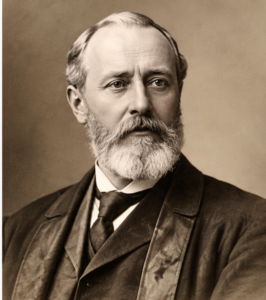 Dr. James Franck Bright was not an obscure provincial clergyman, he was a significant Oxford figure. He had been a Fellow of University College from 1874 and became Master of University College in 1881, a position he held until 1906. He was also a historian, an author, an Oxford City councillor and Treasurer of the Radcliffe Infirmary.
He and his wife Emmeline Theresa Wickham had four daughters: Margaret, Alice, Emily Gertrude and Evelyn. By 1890 his two eldest daughters were married, but the two youngest were young women of marriageable age, and this becomes important because Catherine’s story centred upon an alleged relationship between herself and Haines and Haines’s subsequent engagement to one of the Bright family.
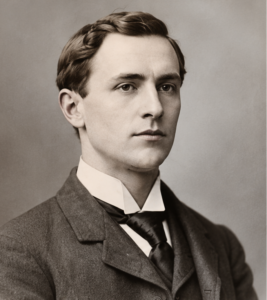 John Thomas Augustus Haines is actually the person whose life we have been able to reconstruct most successfully. He was born in Lambeth in 1861, the son of John Thomas Haines, a professor of music. He came to Oxford through Balliol and was: an exhibitioner, 1878–83; BA in 1883; Fellow of University College in 1883–90; MA in 1886. and ca lassical scholar of considerable distinction.
So when Catherine encountered him, he wasn’t simply an undergraduate. He was an established young academic at University College. The newspaper evidence gives us the extraordinary personal complication. Catherine claimed that she and Haines were married and that she possessed a marriage certificate. Haines emphatically denied this. She also alleged that Dr. Bright had somehow stood between them — her accusation was essentially that Haines had become engaged to a member of Dr. Bright’s family after their own relationship had broken down.
The build-up to 6 November 1890 is where the newspaper reports really bring the case alive.
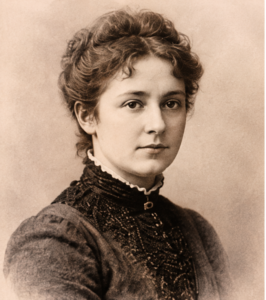 Catherine had apparently become increasingly agitated after Haines’s relationship with her ended and after she learned of his engagement. There were letters. One contained words to the effect that “I am near you every day than you think, and by Monday I will be a murderess.”
Other material sent to the Mitre Hotel contained accusations against Haines and warnings about the consequences if Dr. Bright thought he could arrange his daughter’s marriage without scandal. We have to be careful with these because we are working from contemporary newspaper reports of documents, rather than Catherine’s surviving originals. But taken together, they demonstrate that the shooting was not an entirely spontaneous event. There had been a period of increasingly threatening correspondence.
On the morning of the shooting Catherine arrived at University College. She initially wanted to see Haines. She also asked to see members of Dr. Bright’s family. The porter, William Tomlin, gave some of the most useful evidence. Catherine went upstairs and subsequently returned with a book and something wrapped up. She refused to leave. She apparently indicated that she would remain there all night if necessary. She became angry about being denied access to Haines’s rooms. There were also remarks concerning Dr. Bright giving his daughter in marriage to Haines. At one point, after returning again, she apparently challenged the College staff with: “You are on the alert, are you?” That is an extraordinary detail because, looking back at it alongside the later shooting, it suggests that the people at the College were becoming increasingly conscious that something was wrong.
Eventually Dr. Bright himself came downstairs. According to Walter Rose, Catherine had first asked to see Miss Wickham/Miss Bright. Dr. Bright became involved and she eventually left. But she returned later in the afternoon. This time she asked to see Dr. Bright. When he appeared, the confrontation escalated. Haines was nearby and heard voices from the library. He heard Bright say: “Here is the woman.” Catherine then confronted Dr. Bright about Haines.
This is where the bizarre marriage-certificate claim comes in. According to Haines’s evidence, Catherine said words to the effect: “Why are you holding the dagger over me? You promise marriage, and I have the marriage certificate.” Haines denied ever promising to marry her. He also denied that they had been married.
Catherine produced the revolver. She fired at Dr. Bright. The bullet entered his abdominal wall and exited again; the medical evidence indicated that the wound was potentially serious. Bright’s immediate reaction was to tell someone to “Go for that woman.”
Catherine fled and the revolver was subsequently found near the College. She made her way towards London. And that could have been the point at which the story ended — except the police found her.
On 7 November 1890, Catherine was arrested in London and brought back to Oxford. Her response was memorable: “I am perfectly innocent.” This was despite the considerable amount of evidence placing her at the College.
The newspapers then followed the case closely, and this is where we discovered something important about the historical legal system. The case initially passed through Oxford University’s own jurisdiction, before reaching the Oxford Assizes. That explains some of the apparently confusing newspaper dates and reports we encountered.
The actual Oxford Assizes trial took place on Saturday 15 November 1890. Catherine, aged 35, was described as living at 35 Sydney Street, Fulham Road. She pleaded not guilty.
The prosecution presented the witnesses from University College and the medical evidence. Haines was particularly important. The defence did not really dispute that Catherine had fired the revolver. Instead, the argument was essentially about intent.
Catherine’s own statement from the prison infirmary was read to the court. She said that she had fired at Dr. Bright “to frighten him.” She said she was sorry and asked for the mercy of Dr. Bright, Haines and the Court. She apparently did not want a defence to be made on her behalf. The defence nevertheless argued that her threats had been empty and that there had been no intention to kill.
The judge’s extraordinary summing-up is probably the single most revealing piece of evidence we have. He effectively acknowledged that the background relationship was real. He said that there could be no doubt that there had been relations between Haines and Catherine which were “improper and discreditable to both.”
He went on to say that such relationships were not uncommon and that when Haines’s engagement to a member of Dr. Bright’s family became known, the resulting outbursts were not unusual when such relationships were broken off. That gives us a remarkably different picture from a simple Victorian newspaper story of a mysterious woman suddenly attempting to murder an eminent Oxford don.
There was a real relationship. There was a real break-up. There was a real engagement involving Haines and the Bright family. And there was, apparently, a very serious disagreement about what Haines had promised Catherine.
What we still don’t know is exactly how Catherine understood that relationship and how much of her claim about marriage had any foundation.
After about half an hour, the jury returned. They did not convict Catherine of attempted murder. Instead they found her guilty of: Wounding with intent to do grievous bodily harm. She was sentenced to six years’ penal servitude. The sentence was received with loud hisses.
The distinction between attempted murder and intent to do grievous body harm is important. Newspaper headlines frequently described the affair as an attempted murder, and modern accounts do the same, but her actual conviction was for wounding with intent to do grievous bodily harm.
Locating Catherine after the trial is where our trail becomes frustrating. The best document we found is her 1894 Habitual Criminals Register entry. It records: Riordan, Catherine Theresa (alias O’Hara), born about 1860 in Cork. Height 5 ft 4 in, fair hair, grey eyes, proportionate build, oval face, distinctive marks were tumour scar left back, mole forehead, convicted at Oxford, 6-year sentence, in Woking Female Convict Prison, released 19 November 1894. And, most intriguingly, her destination on release was: 100 Sydney Street, Fulham Road, London.
That is a fantastic little piece of evidence. It gives us a definite alias — O’Hara – but we should be careful about one thing. We cannot yet say that Catherine had been using O’Hara before the shooting. The register proves that O’Hara was associated with her, but not precisely when or why she used it.
Nevertheless, if she had already been comfortable using an alias, and then became the subject of a very high-profile attempted murder case, a change of identity after prison is entirely conceivable. We couldn’t find her in censuses before or after the shooting. We also searched Cork baptismal records and found several Catherine Riordans/Riordens, but none which securely matched Catherine Theresa Riordan. So Catherine’s early life remains our biggest genealogical gap.
Then there is John Haines. We managed to follow him through the period after the shooting. In 1891, he was about 30, working as a tutor in classics, boarding in Kensington. On 25 July 1893 aged 32, he married Annie Sutherland, aged 22, spinster. at Trinity Church, Paddington. His residence at that time was 64 Gloucester Gardens.
So three years after the shooting, Haines had married and was beginning a new phase of his life. In 1901 he was living in Kingsbridge, Devon, with Annie and three children, and was working as a tutor in classics. In 1911 he was living at Radley in Berkshire, with Annie and four children, working as a private tutor.
And there is one fascinating later discovery, a John Thomas Augustus Haines appears in the 1918 Birthday Honours as an OBE recipient in the Postal Censor’s Department.
So Haines’s life didn’t simply vanish – quite the opposite. He married, had a family, continued working, and apparently went on to a wartime government role. That is a rather poignant ending to his part of the story.
 Dr. Bright also continued his life. The shooting did not end his career. He remained Master of University College until 1906, and lived until 1920. University College’s own archive catalogue confirms that the shooting became part of the documented history of his mastership, although unfortunately the surviving Bright papers in the College archive are very limited.
We also found the intriguing 1891 census, in which Dr. Bright was living at Brading on the Isle of Wight with two of his daughters, Gertrude Evelyn, together with other family members and servants. It is tempting to think this was connected with his recovery from the shooting. It certainly fits chronologically.
University College’s archive catalogue specifically points to an article by Dr L. G. Mitchell, “The Shooting of the Master” in the 1995 University College Record, as the detailed modern account of the incident.
There is also a Wikipedia entry for him, from which this photo is taken, and which references the shooting.
“In 1890 Bright was shot by Catherine Theresa Riordan in an incident at University College, but survived. Riordan claimed to have been engaged to John Thomas Augustus Haines, junior dean of the college and that the engagement had been broken off because of one of Bright’s daughters. Haines resigned his fellowship. Riordan was sentenced to six years’ penal servitude for attempted murder.”
Unfortunately, as has been explained above, this last sentence is not quite correct. Catherine wasn’t convicted of attempted murder but rather intent to do bodily harm.
Then there is the daughter question. We established that Dr. Bright had four daughters, but the identity of the daughter to whom Haines was supposedly engaged in 1890 remains unresolved. And that is probably the most interesting remaining question about the actual events of 1890.
CONCLUSION
We’ve reconstructed the event itself using the contemporary newspapers. We know what happened at the College, what Catherine said, what Haines said, what the witnesses saw, what the doctors found, what the defence argued, what the judge thought, and exactly what the jury eventually decided.
But we’ve also taken the story beyond the sensational newspaper reports. The frustrating thing is that Catherine is the person at the centre of the mystery, yet she is the person who leaves the least documentary trail. That is especially understandable if “O’Hara” was genuinely an established alias and if she subsequently chose to live under another name. And the really intriguing gap in the middle is still there, who was the Bright daughter, and what exactly had happened between Catherine and Haines?
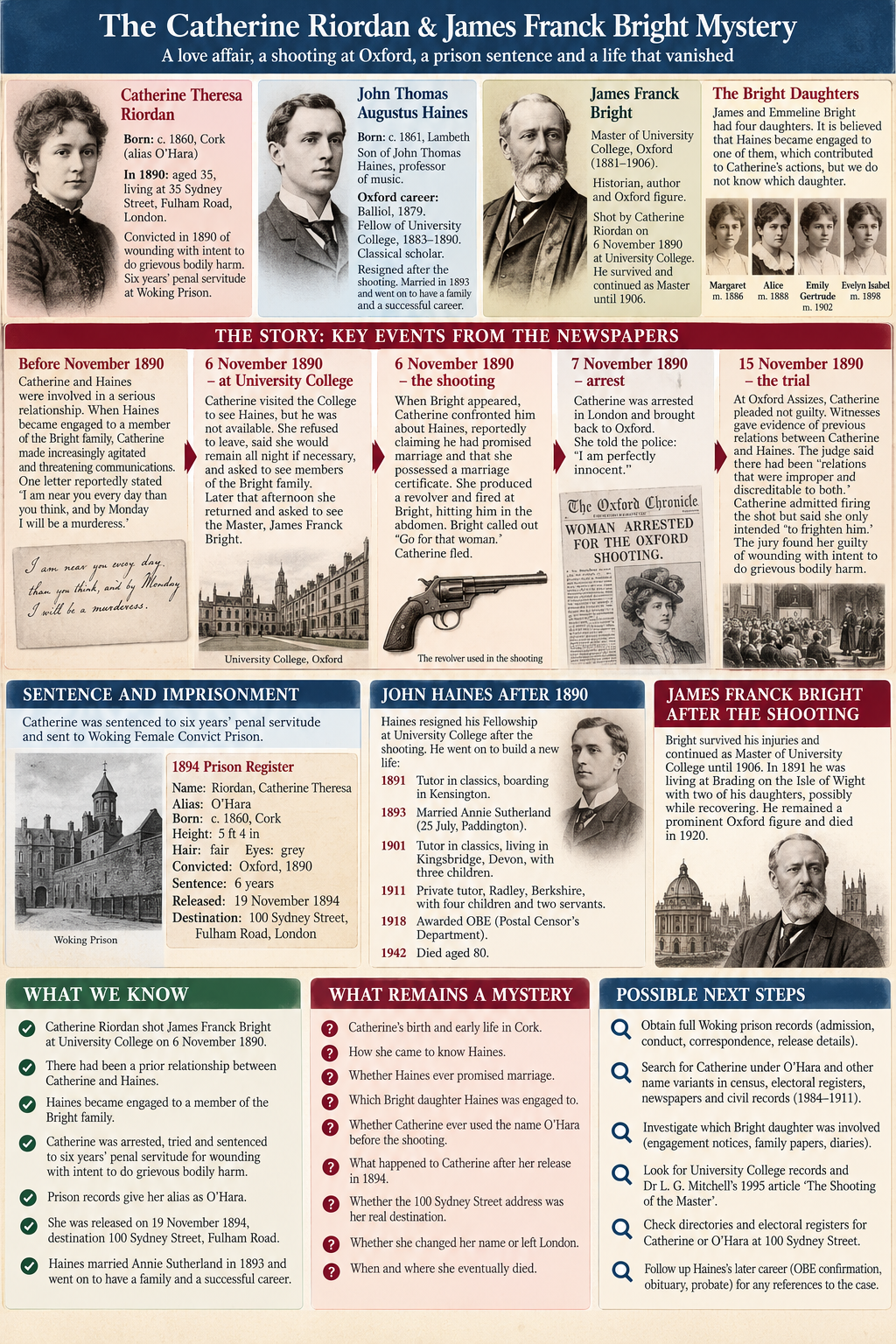
Note: All images generated by ChatGPT expect the photo of Dr Bright sourced from Wikipedia.