1786
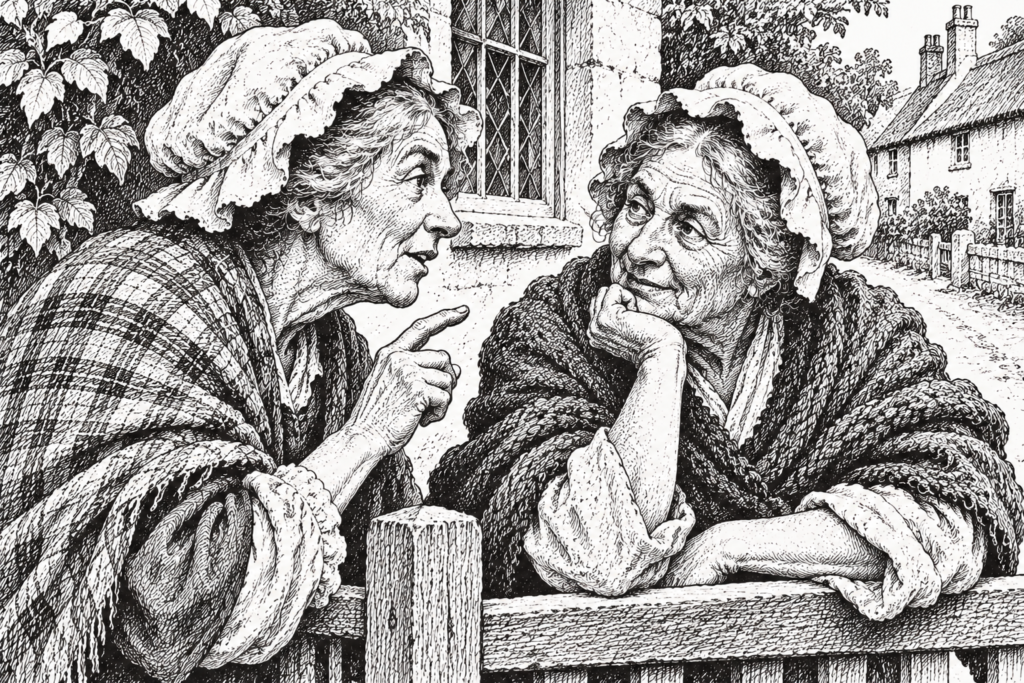
One evening Jack and Mutton were drinking in a public house in Canterbury when a woman from Blean came in. It was Mrs Brett, an elderly woman whom Jack knew by sight. She had come into town on business, and in the course of conversation the two men learned that she was expecting to receive a considerable sum of money for hay she had previously sold.
The amount was about twenty-seven guineas.
Jack listened with interest. Twenty-seven guineas was a fortune to men accustomed to making a few shillings from stolen poultry or clothing. It was enough to keep them in comfort for a considerable time, provided they could get their hands on it.
He waited until Mrs Brett had gone, then turned towards Mutton.
“Did you hear what she said?”
Mutton glanced at him. “About the money?”
“Twenty-seven guineas. She’ll have it with her, or take it home. Either way, we know where to find her.”
Mutton considered the matter, looking down at his drink.
“Where does she live?”
“At Blean. With her sister, Mrs Widdett.”
“And you think the money will be there tonight?”
“It’s worth finding out.”
Jack leaned closer.
“We have a good opportunity to do the old lady this evening.”
Mutton gave a slight nod. “I agree.”
They did not spend much longer discussing it. The decision had been made, and neither man seemed troubled by the prospect of entering the home of two elderly women in the middle of the night. They were thinking of the money, and of what they might buy with it. The women themselves scarcely entered into their calculations.
There was one thing they did not know. Although Mrs Brett had received the money, she had left it in the safekeeping of Colonel Webb. The twenty-seven guineas would not be in the house when they arrived.
But that was a discovery they would make too late.
The house on Blean Common
It was about ten o’clock when Jack and Mutton reached the house.
The village and surrounding countryside were quiet. Most households had settled for the night, and there was little movement on the roads. The two men approached cautiously, looking for a way in that would not attract attention.
They found it at the pantry window.
Once inside, they passed from the pantry into the wash-house, then through the fore-room and towards the stairs. The house was properly secured, with good locks on the doors. It was not an easy place to search, and the men had to force open four doors as they made their way through it.
The noise was considerable.
Jack was apparently more amused than concerned by the disturbance. He had been in houses before at night and had grown accustomed to the risks. Mutton, however, was less inclined to treat the business lightly.
The noise had awakened Mrs Widdett.
She stirred in her bed, listening. At first she could not make sense of what she heard. There were sounds from elsewhere in the house, the opening and closing of doors, and the unmistakable noise of something being forced.
Perhaps the cows had got in, she thought. It was not an impossible explanation in a country household, and she called out to her sister.
“Mrs Brett! Mrs Brett!”
Mrs Brett slept in the adjoining room. She was deaf, and there was no answer.
Mrs Widdett called again, louder this time.
Jack heard her and, by his own later account, could not help laughing.
Mutton turned on him.
“Stop that!”
Jack tried to contain himself, but the situation amused him.
“I said stop,” Mutton hissed. “If you don’t, I’ll break your neck.”
He was in no mood for laughter. Bursting open the door, he entered Mrs Widdett’s bedroom.
The old woman had barely had time to gather her thoughts before he was beside her bed. He threatened to blow her brains out if she spoke another word and demanded that she hand over her keys and money.
“Please,” she began.
“Not a word more. Your keys. And your money.”
She looked at him in terror. There was little she could do against a man who had broken into her home and was threatening her life. She gave him what he demanded.
Mutton took two half-guineas, two gold rings from her fingers and about seven or eight shillings in silver.
Jack watched as the search continued. They opened drawers and cupboards, looking for anything that might be worth carrying away. Among the silverware they found six teaspoons, four tablespoons and one very large spoon.
The large spoon was marked with the names of Mrs Widdett’s father and mother.
She recognised it immediately.
“Please,” she said, seeing Mutton take it. “That one. You must leave me that one.”
Mutton turned towards her.
“Where’s the money?”
“I have told you—”
“You haven’t told me anything useful. If I don’t find what I’m looking for, you’ll have nothing left.”
“But that spoon belonged to my father and mother. It is all I have of theirs.”
Mutton paid no attention. He put it with the other silver.
Jack had been watching the woman. He knew what they were doing was wrong, though it had not prevented him from entering the house or taking part in the robbery. He was not prepared to abandon the proceeds, but something in Mrs Widdett’s distress troubled him.
When Mutton’s attention was elsewhere, Jack took the large spoon and quietly threw it onto the bed.
Mrs Widdett looked down. For a moment she seemed unable to understand what had happened. Then she saw the spoon beside her and drew it towards her, keeping it close.
She did not thank Jack. She was too frightened, and perhaps she did not know which of the two men had returned it.
Jack said nothing.
Mrs Brett’s room
The men next turned their attention to Mrs Brett.
Her bedroom was more securely fastened than the others. There were bolts and locks, and chests had been placed in such a way that the door was difficult to force. Jack and Mutton tried to open it, but their efforts were unsuccessful.
They had little patience for obstacles.
They began to break through a panel in the middle of the door. When the panel gave way, she saw them.
“For God’s sake, don’t hurt me!”
Mutton moved towards her.
“If you speak again, I’ll blow your brains out.”
Mrs Brett pulled the bedclothes around herself, wrapping them tightly as though they might offer some protection. She was an elderly woman, alone in her room, confronted by two men who had already broken into her sister’s bedroom and threatened her. She submitted to their demands.
Jack and Mutton began to search.
They had not been in the room long when something happened that might easily have brought the whole affair to an end.
A party of smugglers arrived at the house.
The men had ridden up and dismounted close to the windows. They wanted refreshment and appeared to have no suspicion of what was taking place inside.
Jack and Mutton heard them outside. The sound of horses and voices was enough to make them stop what they were doing. Until that moment, they had been concerned only with the women and the property. Now they faced the possibility of discovery by a group of men who might not hesitate to intervene.
Jack looked towards Mutton.
“What are we to do?”
“Keep them quiet.”
The two burglars positioned themselves beside the women, one at the head of each bed, making certain that neither could call out. The smugglers remained outside for about a quarter of an hour. They were close enough to the windows that the women must have known help was near, yet they dared not cry out.
Jack and Mutton waited.
The smugglers did not suspect anything. After staying for a short time, they mounted their horses and rode away.
The sound gradually faded along the road.
Only when they were certain the visitors had gone did the burglars resume their search.
The missing twenty-seven guineas
They returned to Mrs Brett’s belongings.
Jack and Mutton searched her pockets and found eighteen or nineteen shillings. They also took five gold rings from her fingers. The rings were removed one by one, and then the men turned to the drawers.
There they found two large silver spoons and six teaspoons.
They searched further, breaking open a chest. At the bottom was a purse containing eight or nine half-crowns and a remarkable crown-piece.
It was valuable, and Jack noticed it, but it was not what they had come for.
Mutton was becoming impatient.
“Where is the money you received today?”
Mrs Brett looked at him.
“What money?”
“The money for the hay. The twenty-seven guineas.”
“I have no money here.”
“Don’t tell me that. You came into Canterbury for it.”
“I did receive it.”
“Then where is it?”
Mrs Brett hesitated. She had no reason to protect the men who were threatening her, but she may have been afraid that telling them the truth would only make matters worse.
“I left it with Colonel Webb.”
Mutton stared at her.
“You left it?”
“Yes. I did not bring it home.”
For a moment neither man spoke. They had taken the risk of breaking into the house because they believed the money would be there. Now they discovered that the principal object of the robbery was beyond their reach.
Jack looked at Mutton. The expression on his companion’s face was enough to tell him how disappointed he was.
“We’ve come all this way for nothing,” Mutton muttered.
“We haven’t come away with nothing,” Jack replied.
Mutton was not satisfied.
“If the money isn’t here, we’ll take what is.”
They continued their search. Another chest was broken open, and inside they found two silver mugs and a piece of Indian handkerchief. They gathered these with the other possessions they had already taken.
The house had been thoroughly ransacked. The two women had lost money, rings and a considerable quantity of silverware, though the twenty-seven guineas had escaped them.
Supper
Having searched the rooms, Jack and Mutton returned downstairs.
They had been in the house for some time, and the danger of the initial discovery seemed to have passed. They examined the cupboards and found beef steaks and cucumbers.
Rather than leave at once, they decided to eat.
Jack and Mutton sat down and made what he later described as a hearty meal. They also drank about half a bottle of geneva.
It was a strange and disturbing conclusion to the night’s work. The women remained upstairs, frightened and helpless, while the two men who had threatened them helped themselves to their food and drink. They behaved almost as though they were guests in the house, with no apparent concern for the distress they had caused.
At last they gathered their booty and left.
They made their way towards Canterbury and went to a place known as the Forty Acres, near St Dunstan’s. There, between some rows of beans, they buried the silver plate.
They divided the money between them.
Mutton returned to Canterbury. Jack went home.
For a few hours, it might have seemed that they had got away with everything. They had entered the house, taken a considerable amount of money and property, escaped the arrival of the smugglers and hidden the plate. The two women had been left behind, but neither man had been stopped.
Jack went to bed believing himself safe.
He was soon to discover otherwise.
The morning arrest
The following morning, a constable came to Jack’s house and took him from his bed.
Jack was carried before a magistrate on suspicion of being an accomplice in the robbery. The arrest must have been an unwelcome shock, though he could hardly have expected the burglary to remain undiscovered. Mrs Widdett and Mrs Brett had been robbed in their own home, and the loss of so much property would ensure that enquiries were made.
Jack was brought before the magistrate, where he found himself in a difficult position. He had taken part in the robbery and had shared the proceeds with Mutton. If the authorities could establish his involvement, he might face the same serious charge as his companion.
While Jack was there, Mr Hatton, the keeper of St Dunstan’s Gaol, arrived.
He had news of another arrest.
“I have taken William Mutton,” he told the magistrate. “He was at his sister’s house in Turn-again Lane.”
Jack listened.
Mutton had been searched, and among his possessions was a remarkable crown-piece.
It was the distinctive coin taken from Mrs Brett’s purse.
The discovery placed Mutton in serious difficulty. It also made Jack’s own position more precarious. The authorities now had one of the stolen articles, and they had both men in custody.
Jack had a choice to make. He could remain silent and risk being tried with Mutton, or he could tell the authorities what had happened and hope to save himself.
He chose to speak.
Jack turns King’s evidence
Jack gave a full account of the robbery. He told the magistrate how he and Mutton had entered the house, what they had taken, and where they had buried the silver.
Mr Hatton accompanied him to the Forty Acres.
The place was not easy to identify unless one knew where to look. Jack led him between the rows of beans and showed him the spot where the plate had been hidden.
They began to dig.
The silver was found.
Jack’s account had been confirmed, and the authorities now had both the evidence of the stolen crown-piece and the recovery of the buried property. Mutton was committed for trial, while Jack was admitted as an evidence against him.
He had turned King’s evidence.
The decision marked a decisive break between the two men. They had been partners in the robbery, had shared the proceeds and had faced danger together. Now Jack was giving evidence that would help send Mutton to the gallows.
It was a means of saving himself, but it was also a betrayal of the man with whom he had committed the crime. Jack must have understood that Mutton’s fate would depend, in large part, upon what he said.
Yet he did not withdraw his account.
Mutton was committed to take his trial, and Jack remained in custody, now as the principal witness against him.
The trial at Maidstone
The case came before the Summer Assizes at Maidstone on 31 July 1786.
William Mutton was charged with breaking into the dwelling-house of Elizabeth Whiddett and Susannah Brett at Blean and stealing their money and property. The charge was burglary, a serious offence for which the punishment could be death.
Jack gave evidence against his former companion.
The proceedings brought the events of that night into the open: the entry through the pantry window, the forced doors, the threats made against the two women, the taking of their money and jewellery, and the removal of the silverware. The buried plate had been recovered, and the remarkable crown-piece found on Mutton provided further evidence.
Mutton was found guilty and capitally convicted.
The sentence was death.
Jack’s position was different. Although he had taken part in the burglary, he had been admitted as an evidence against Mutton. He was ordered to remain in gaol for twelve months unless he could find sureties for his good behaviour.
The sureties were beyond his means and, in the circumstances, difficult to obtain. He therefore remained in prison.
He had escaped the gallows, but he had not regained his freedom.
The last conversation
Mutton was held at Maidstone while preparations were made for his execution. Jack remained in gaol, and the two men continued to see one another.
On the morning before the execution, the two men spoke for nearly two hours.
Mutton knew that his time was almost over. There was little left to discuss about the trial, and neither could change what had happened. Instead, he turned his attention to Jack’s future.
“You have been lucky,” he said at last.
Jack did not answer immediately.
“Lucky?” he asked.
“You know what I mean. You’re still alive, and I’m not going to be.”
Jack looked at him. “You might have been able to escape it yourself.”
Mutton gave a short, humourless laugh.
“We both know how it happened.”
There was no point in arguing. They had both been in the house. They had both taken the money and silver. Jack had escaped the sentence of death by turning evidence, while Mutton had been left to face it.
Mutton began to speak about the life they had led and the company they had kept. He warned Jack particularly against the women with whom he had spent so much of his money.
“Take care of the company you keep,” he told him. “It will bring you to the same end if you don’t.”
Jack listened.
Mutton explained that when he had been working, he had wanted for neither money nor friends. He had not needed to steal to keep himself alive. Much of his trouble, he believed, had come from the endless demands of women whose company he had sought and whose wants he had tried to satisfy.
“You’ll find yourself working all week,” Mutton said, “and then spending everything you have as soon as you get it. And when it’s gone, you’ll go out again to find more.”
Jack knew the pattern. He had lived it himself.
Mutton continued, urging him to keep away from the company that had drawn them both into trouble. He spoke with the seriousness of a man who had nothing left to lose, and who wished at least to make his last advice count for something.
It was a strange conversation between two men whose friendship had survived so much, and whose partnership had ended in such a terrible way. Mutton had every reason to resent Jack, yet according to Jack’s recollection he spoke without bitterness and spent his final hours trying to warn him.
Whether Jack remembered every word exactly as it was spoken, or whether the passage of time softened the conversation, we cannot know. But the warning itself was plain enough.
Mutton had reached the end of his life. Jack still had a chance to change his.
Penenden Heath
On Thursday, 17 August 1786, William Mutton was taken from Maidstone Gaol to Penenden Heath.
He was executed there alongside three other men: William Oliver, James Bagly and John Williams.
Jack was not present. He remained in gaol, having escaped the sentence imposed upon his companion. Mutton’s death brought their partnership to an end, but it did not remove Jack from the world in which they had both lived.
The events at Blean had left two elderly women robbed and terrified, one man dead, and another still confined. Jack had saved himself by giving evidence against Mutton, but he could not escape the knowledge that he had been equally involved in the crime.
He had returned the great silver spoon to Mrs Widdett, but he had not returned the money, the rings or the other silverware. He had helped to frighten two women in their own home, and had then sat downstairs eating their food while they waited in fear.
The spoon had been a small act of pity. It did not make him innocent.
Nor did his evidence against Mutton make him honest.
For the time being, Jack remained behind bars. He had been ordered to find sureties for his good behaviour, and until he could do so, he would have to serve the twelve months in gaol.
Perhaps Mutton’s last words stayed with him. Perhaps, for a while, he considered the possibility of living differently. But the warning of a dying companion was not enough, by itself, to change the habits of a lifetime.
The partnership with Mutton was over. The road that had brought Jack to Blean Common and then to Maidstone had not yet reached its end.
And there were still twelve months of confinement ahead of him.