The newspaper report that launched this investigation appeared in the Western Daily Press on 5 November 1866 and presented a remarkable story.
| A MAN WITH FOUR WIVES. – At the Liverpool Police-court on Friday, a man names Thomas Rigby, alias Bell, was brought up on a charge of bigamy. Mr Cobb, solicitor, who appeared for the prosecution, said that the defendant was transported in 1825 for burglary with violence, and liberated in 1840. His first wife was married to him near Preston, and then residing at a place called Lowes Side, Leyland. In 1852 he also married, at Leyland, a woman called Iddon, who appeared in court on Friday, and said that she had not seen the prisoner’s first wife, who, she believed, was still alive, for several years. The prisoner had also married a third wife, and a few days ago had married a fourth at Chester. All the prisoners wives are supposed to be alive, and the prisoner was remanded in order that the first wife might be brought up to give evidence. |
The newspaper’s sensational headline invited readers to marvel at his apparent audacity. Yet beneath the newspaper drama lay a genuine historical puzzle. Who was Thomas Rigby? How had he returned from transportation? Where had he lived during the intervening decades? And how much of the story could be established from surviving records? Our investigation has answered several of these questions, although important gaps remain. It has also shown the need to distinguish facts confirmed by original records from claims made in contemporary newspapers and identities that remain unproven.
Thomas Rigby before transportation
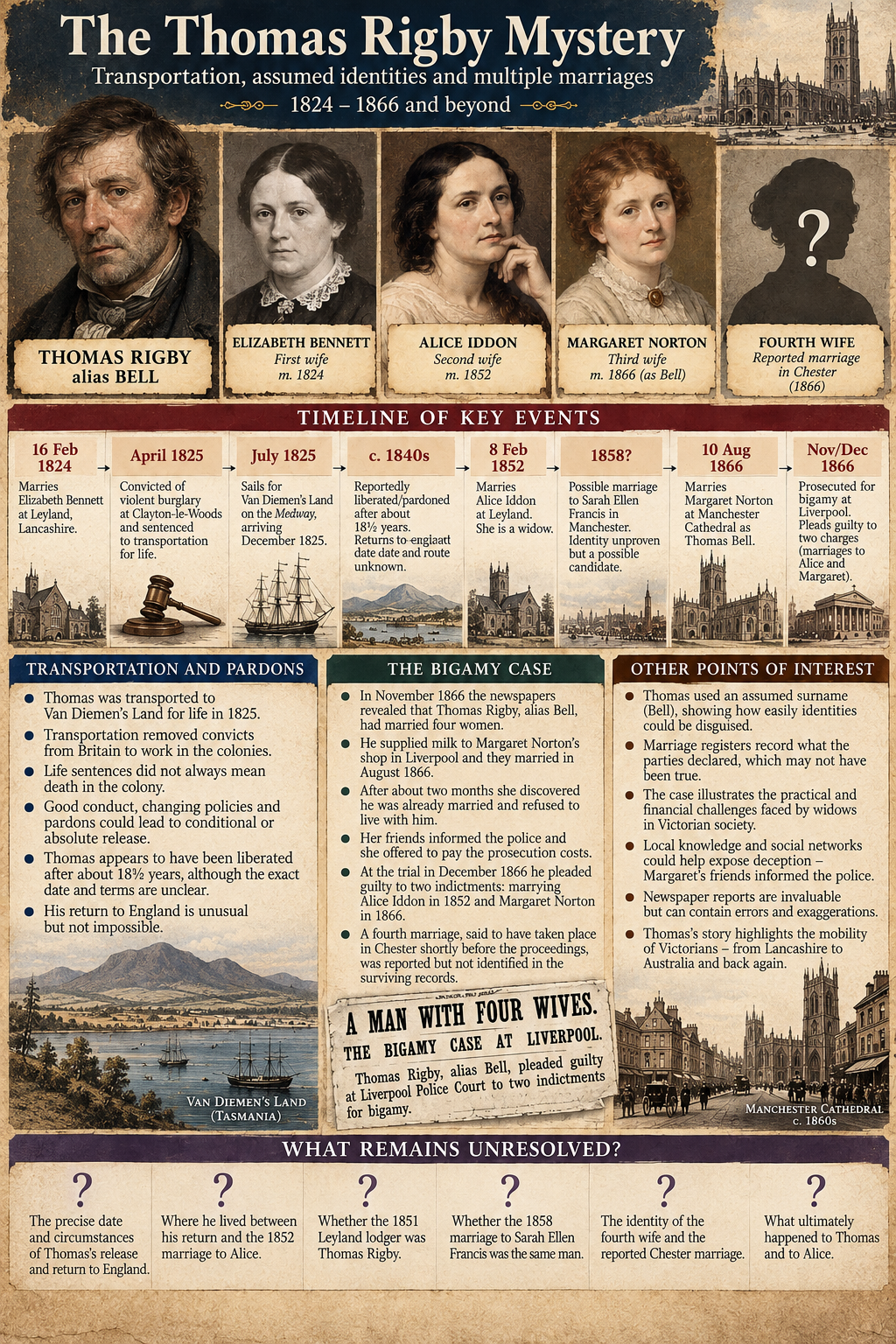
 The earliest firm evidence we found is a marriage at Leyland, Lancashire, on 16 February 1824, when Thomas Rigby married Elizabeth Bennett(t). The spelling varies between records and reports.
In 1825, Thomas, then about 22, was tried at the Lancaster Spring Assizes for a violent burglary at the dwelling of Martha Andow at Clayton-le-Woods. He was tried alongside Robert and Henry Robinson. Newspaper reports indicate that Thomas and Henry received reprieves, while Robert was left to face execution.
Thomas was sentenced to transportation for life. His convict record identifies him as a prisoner aboard the Medway, which departed on 28 July 1825 and arrived in Van Diemen’s Land on 14 December 1825.
This gives us a clear beginning to his adult life: a young married man from Lancashire, convicted of a serious crime and sent thousands of miles from home under a sentence intended to remove him permanently from British society.
Transportation, release and the mystery of his return
Thomas’s transportation is one of the most striking aspects of the case. Transportation was not simply a long prison sentence served overseas. It removed convicts from Britain, separated them from their families and communities, and placed them within a colonial system of punishment and labour.
Van Diemen’s Land, now Tasmania, received large numbers of British and Irish convicts during the nineteenth century. Convicts could be assigned to private employers, required to work under government supervision, and subjected to disciplinary regulations. Their prospects depended on their sentence, conduct, circumstances and the policies in force at the time.
Although Thomas received a life sentence, that did not necessarily mean he would remain in the colony until his death. Convicts could receive conditional or absolute pardons, and other forms of remission or release were possible under the penal system. A conditional pardon might free a convict within the colony while restricting his right to return to Britain or Ireland; an absolute pardon removed those restrictions. The precise legal effect depended on the type of pardon and the regulations applicable at the time.
The newspaper report from 1866 states that Thomas was transported for burglary with violence and was “liberated in 1840”. We also found a Tasmanian pardon-register entry for Thomas Rigby, transported on the Medway after his Lancaster trial in 1825. The entry notes approximately eighteen and a half years in the colony. So, the period of eighteen and a half years points to approximately 1844 –rather than 1840. We have not established a definitive release date or locate a record conclusively documenting his return to England.
Thomas’s return to Britain means he managed to return to Lancashire after years overseas and resumed a life in which his earlier history was not necessarily known to everyone he encountered.
The marriage to Alice Iddon
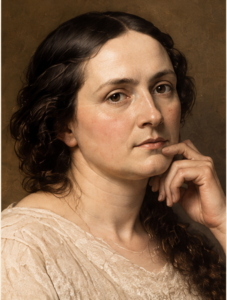 The next major documentary milestone is Thomas’s marriage to Alice Iddon at Leyland Parish Church on 8 February 1852.
The marriage register records Thomas Rigby as of full age, a bachelor and a weaver, resident in Leyland. His father is named as William Rigby, a weaver. Alice is recorded as a widow, also of full age, with her father named as John Robinson, a weaver. (It is interesting that the name Robinson appears again – but we haven’t yet established a relationship between her and Thomas’s two accomplices, Thomas and Henry Robinson in 1825.)
Alice’s first husband, Nicholas Iddon, had died in 1848, and in the 1851 census, she appears as a widow and cotton hand-loom weaver at Dunshields Lane, Leyland, with her daughters Margaret, Dinah and Mary. She was therefore living locally shortly before her marriage to Thomas.
The evidence suggests that Thomas and Alice separated. In fact a December 1866 newspaper report says they had been separated by mutual consent for seven years, which would place the separation around 1859.
Alice appears in the 1861 census in the household of George Iddon, her late husband Nicholas’s father. She appears to have remained associated with that household in 1871. The dates are consistent with her having returned to her husband’s family after separating from Thomas, although the exact circumstances are unknown. We were unable to establish Alice’s complete later history with certainty.
The newspapers claimed that Thomas and Alice had ten children. We investigated baptisms and civil registrations, including several children named Thomas, William, Elizabeth and Simon. Unfortunately, the Lancashire records contain numerous couples named Thomas and Alice Rigby, often with similar occupations. Some apparent candidates could be assigned to other families; others remained uncertain. We found baptism records that might fit, but none provided a secure enough link to attach the children confidently to the couple in the bigamy case.
The claim that they had ten children therefore remains a newspaper assertion that we could not independently verify. This is an important example of how easily a family tree can become unreliable when names, dates and occupations appear to fit without a distinctive identifying link.
The elusive years: where was Thomas in 1851 and 1861?
One of our main objectives was to locate Thomas in the census returns between his presumed return from transportation and the 1866 prosecution. This proved more difficult than expected.
In the 1851 census we found a Thomas Rigby, aged 47, recorded as married and working as a cotton hand-loom weaver. He was lodging with the Pickup family at Holden Hill, Leyland. A servant named Catherine Robinson, born in Leyland, was also recorded in the household. This is an attractive candidate. His age, occupation, marital status and location are all consistent with the man who married Alice the following year.
Catherine Robinson might also have been connected to Alice’s family, as Alice did have a sister named Catherine. However, we could not establish Catherine’s identity. Several women named Catherine Robinson were born in the relevant period to fathers called John, and the possible connection could not be proved. We therefore retained the census entry as a promising lead, not a confirmed identification.
A second possibility emerged in the 1861 census when we found a Thomas Rigby, a gasfitter, living with Sarah Ellen Francis (née Hinchcliffe), whom he had married in 1858. Sarah was a younger widow, and the couple’s marriage and census entry appear to belong together. This raised the possibility that our Thomas had married another woman while his marriage to Alice was still in force.
The 1858 marriage register records Thomas as a widower and gives his father as James Rigby, whereas the 1852 marriage to Alice gives William Rigby as Thomas’s father. Initially, these discrepancies seemed to argue against the identification, however, given that Thomas supplied false details on marriage records, we could not safely treat those declarations as reliable proof of a different identity.
Other family historians researching Sarah Ann Hinchliffe have also apparently been unable to establish Thomas Rigby’s origins. We were also unable to trace Sarah confidently in the 1871 census, either under Rigby or Francis or Hinchliffe. The possibility remains unresolved. We cannot say that Sarah was another wife of the bigamist, but we cannot exclude the idea solely on the basis of the details he gave at the 1858 marriage.
These searches illustrate a recurring difficulty in Victorian genealogy: a name, approximate age and occupation may suggest a match without proving one. Thomas Rigby was not an unusual enough name to make every matching record his. We found no census entry that could be conclusively identified as our Thomas.
The marriage to Margaret Norton
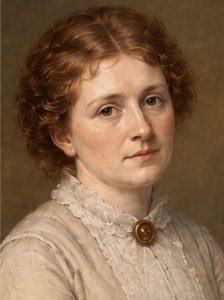 The most securely documented later marriage took place at Manchester Cathedral on 10 August 1866. The register records the groom as Thomas Bell, aged 63, a widower, with an occupation of reedmaker. The bride was Margaret Norton, aged 42, also a widow. Both gave the same address – 42 Freme Street, Everton Road. The groom named his father as William Bell, a manufacturer; Margaret named her father as Hugh Young, a farmer. The groom signed his name Thomas Bell.
This record is central to the case because the newspaper reports identify Thomas Bell as Thomas Rigby. Yet the discrepancies between this entry and the 1852 marriage to Alice are considerable: the surname, marital status, occupation and father’s name differ. In the context of a bigamy prosecution, those differences are not enough to disprove the identification, but neither should they be ignored.
A further newspaper report, published in November 1866, added important details about Margaret’s circumstances. She was living in Liverpool and kept a shop in Scotland Road. Thomas was a milkman who supplied her with milk. They had known each other for approximately eight or nine months before the proceedings, suggesting that their acquaintance began around February or March 1866. They married in Manchester in August 1866 and, according to the report, lived together for only about two months. Margaret then discovered that Thomas was already married, refused to continue living with him and ordered him to leave.
This account provides a plausible explanation for how they met: through an ordinary business relationship. It does not tell us how she discovered the earlier marriage.
The proceedings took place before Liverpool Police Court, rather than a Manchester court. The report says that Margaret’s friends gave information to the police and that Thomas was taken into custody. Margaret offered to pay the costs of the prosecution. This is an important refinement of our understanding. Margaret appears to have been determined to pursue the matter, but the report specifically credits her friends with informing the police. We cannot conclude that she personally initiated the proceedings, although her offer to meet the costs suggests that she supported them.
We still do not know who first revealed Thomas’s earlier marriage, whether someone recognised him, or how the information was obtained. Nor have we established a connection between Margaret and Alice or the Iddon family.
The shared address on the marriage register initially raised the possibility that Thomas had moved in with Margaret before the wedding, or that the address had been used for the purpose of the marriage. We could not establish the significance of the address. No number 42 Freme Street, Everton Road, appeared in the 1861 census, although number 41 was occupied by Robert James, an agent in milk. This is an interesting occupational coincidence, but we found no evidence connecting Robert James to Thomas. The address may have been a genuine residence by 1866, or its street name or number may have been misread.
The fourth wife: a marriage in Chester?
The November 1866 reports refer to a fourth woman whom Thomas had married in Chester shortly before the first hearing. The timing was said to be approximately ten days before the proceedings. We searched civil marriage registrations and parish marriage records but did not identify a convincing entry under either Thomas Rigby or Thomas Bell. The bride was not named in the newspaper reports we found.
There are several possible explanations. Thomas may have used another assumed name; the report may have given an imprecise date or location; or the marriage may have been recorded under a name that we have not connected to him. The December quarter of 1866 contains numerous possible marriages involving men named Thomas, so a name-only search produced too many candidates. Without the bride’s identity or another distinguishing detail, we could not confidently identify the marriage.
The fourth marriage therefore remains reported by the contemporary press but not independently identified. It is an important part of the story, but we should not attach it to any particular registration.
The trial and conviction in 1866
The newspaper reports culminate in the proceedings against Thomas Rigby, alias Bell, in December 1866. The trial report states that Thomas, described as aged 64 and a weaver, pleaded guilty to two indictments:
- Marrying Alice Iddon at Leyland on 8 February 1852 while Elizabeth Bennett was still alive.
- Marrying Margaret Norton at Manchester on 10 August 1866 while the earlier marriage remained in force.
The prosecution’s focus on the marriages to Alice and Margaret is significant. Although the newspapers mentioned four wives, the two charges recorded in the trial report concerned Alice and Margaret. The reported Chester marriage was not one of those two indictments. That helps explain why we cannot necessarily expect every suspected relationship to appear in the legal proceedings. The newspaper’s wider narrative and the charges actually prosecuted are not identical.
Thomas’s guilty plea is a particularly strong piece of evidence for the two charged marriages. It establishes that the proceedings were not simply a newspaper rumour, although many details surrounding his earlier life still depend on the surviving reports.
What happened to Thomas and Margaret afterwards?
Margaret’s later life offers a small amount of additional information. Following her marriage to Thomas Bell in August 1866 and their brief cohabitation, she subsequently married John Mort on 25 January 1870, using the surname Morton. By the 1871 census, she was living with John Mort and her youngest son.
This gives us a broad outline of Margaret’s life after Thomas. However, we have not established what happened to Thomas following the 1866 proceedings.
Transportation did not always end a convict’s story
Thomas’s apparent return to England is a reminder that transportation was not invariably the end of a person’s connection with Britain. Some convicts sentenced to lengthy or life terms were eventually released or pardoned, although their precise rights and restrictions depended on their legal status. For a family historian, this matters because a person who disappears from British records in the 1820s may reappear decades later. The intervening years might be documented in colonial convict records, but the transition back to Britain can be difficult to trace. Thomas’s story also demonstrates the importance of checking convict registers, trial reports and pardon records alongside British parish and census material. Without the transportation record, his disappearance from Lancashire could have been interpreted very differently.
Identity could be difficult to establish across records
Thomas’s use of the surname Bell is central to the case. The differences between his two marriage records demonstrate how difficult it can be to link a person across documents when the names and personal details are inconsistent. Victorian marriage registers are indispensable sources, but they record information supplied by the parties. They do not guarantee that every declaration was truthful. A false father’s name, occupation or marital status could send a researcher down the wrong genealogical path. This does not mean that conflicting records should be dismissed whenever they are inconvenient. Rather, they need to be assessed alongside independent evidence, including newspaper reports, prison records, addresses, witnesses and the chronology of events.
Women’s practical and financial circumstances
Margaret’s experience illustrates how a relationship could begin through everyday commercial contact. Thomas supplied milk to her shop, and the relationship developed into marriage. When she discovered his existing marriage, the couple separated quickly. Her willingness to offer to pay the prosecution costs is also notable. It suggests that she was prepared to support the proceedings financially, although the report does not tell us the full extent of her involvement. Her later marriage to John Mort shows that her life continued beyond the case. We should resist reducing her entire biography to her brief marriage to Thomas.
Alice’s story is different. A widow with children, she married Thomas in 1852 and appears to have returned to the household of her late husband’s family after their separation. This raises questions about family support and the practical arrangements available to a woman whose marriage had broken down, but we cannot establish the details of her experience from the surviving evidence.
The importance of reputation and local knowledge
The case also highlights the role of social networks in exposing deception. Margaret’s friends informed the police, according to the newspaper report. This suggests that the information which led to the prosecution circulated through personal relationships rather than necessarily emerging from a systematic investigation of Thomas’s earlier life. We do not know who first uncovered his identity or what evidence they found. Nevertheless, the account reminds us that information about a person’s previous marriages could be held by former spouses, relatives, neighbours and acquaintances, even when official records were difficult to connect.
Newspaper reporting: valuable but not infallible
The contemporary press supplied much of the narrative that made this investigation possible. It provided details about Thomas’s transportation, his marriages, Margaret’s discovery and the legal proceedings. However, newspaper accounts can contain errors in dates, ages and chronology. In this case, the report’s suggestion that Thomas and Margaret had married about eighteen months before the proceedings conflicts with the marriage register’s date of 10 August 1866. We therefore relied on the register for the marriage date. The reported release date of 1840 also conflicts with the approximate period suggested by the convict-register notation. These discrepancies demonstrate why newspapers should be checked against original records wherever possible.
CONCLUSION
This case has produced a substantial body of evidence, but not a complete biography. The most striking feature of the case is the contrast between the firm documentary outline and the gaps in the man’s personal history. We can follow Thomas from his first marriage through his conviction and transportation, then back into the record through the 1852 and 1866 marriages. But we cannot securely identify him in either the 1851 or 1861 census, and the intervening years remain obscure.
We should not assume that every possible Thomas Rigby we encountered was the same person. Nor should we discard an interesting candidate merely because a marriage certificate contains details that may have been falsified. The correct conclusion is to preserve these possibilities as leads rather than turn them into facts.
Thomas’s return from transportation, his use of an alias and the bigamy proceedings make him an extraordinary subject for a Victorian mystery. We have established the principal events, recovered valuable details about Alice and Margaret, and identified the questions that remain unanswered.
The case can therefore be closed with a clear conclusion: the bigamy proceedings are documented, the two charged marriages are established, but Thomas Rigby’s life between transportation and prosecution — and his fate afterwards — remains only partly reconstructed. The loose ends are real, and leaving them unresolved is more faithful to the evidence than forcing a final answer.
Note: All images generated by ChatGPT