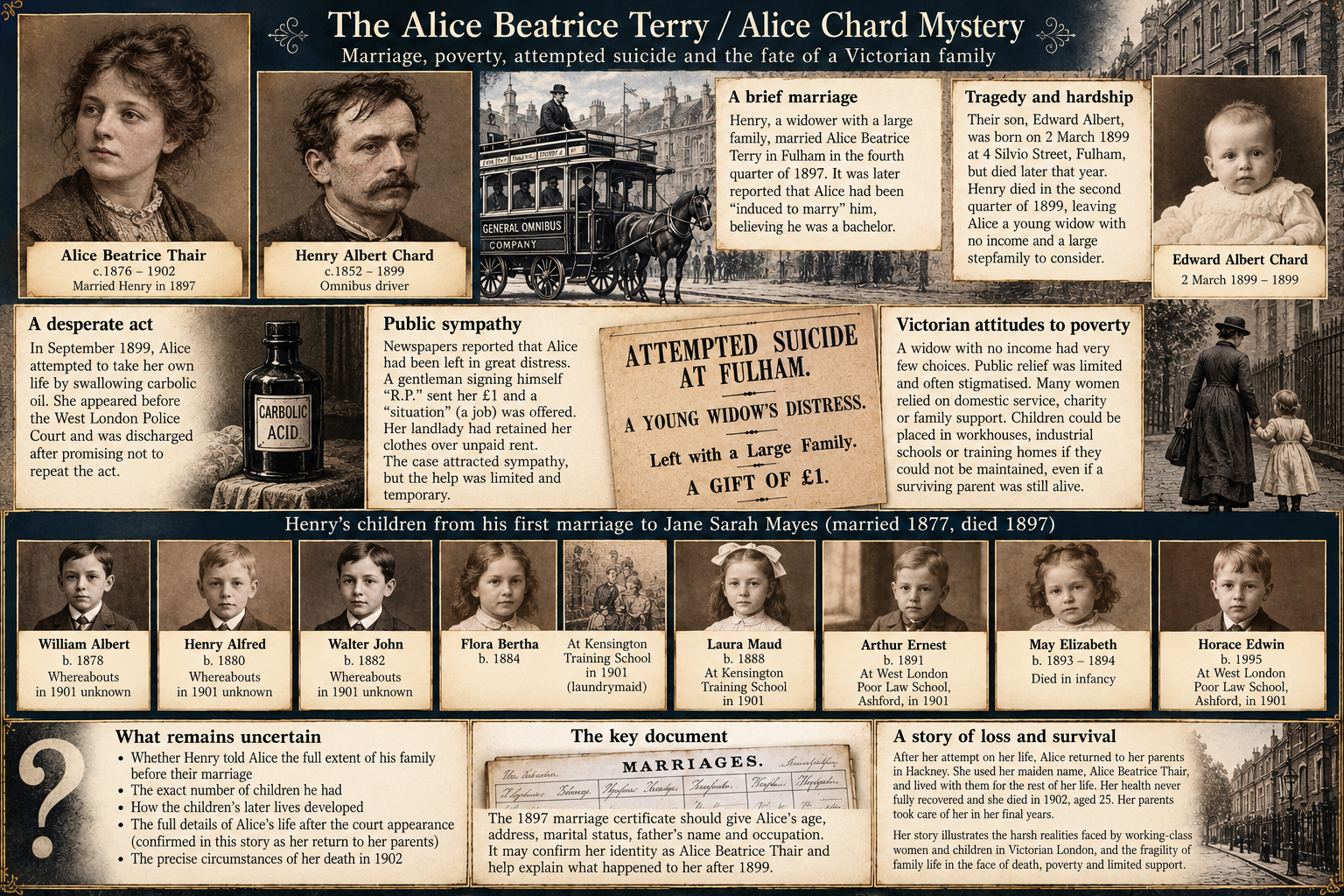
This mystery began with a newspaper report of a young widow’s attempted suicide but became a wider investigation into a deceptive marriage, a hidden family history, Victorian poverty, the institutional care of orphaned children, and the unresolved identity and fate of a woman whose life was shaped by bereavement and hardship.
THE NEWSPAPER ARTICLE
Shepton Mallet Journal, 1 September 1899
| MARRYING A MAN WITH 14 CHILDREN
Alice Chard, aged 23, living at Silvio Street, Fulham, was charged with attempting to commit suicide by taking carbolic oil. She looked very ill, and was allowed to be seated. After she made the attempt on her life she was removed to the west London Hospital, where the house surgeon administered restoratives, with the result that she recovered consciousness. Sergeant Ready, the chief warrant officer of the court, gave an account of the woman’s antecedents. She was, he said, induced to marry an omnibus driver, whom she understood to be a bachelor, but found out to her dismay that he was a widower with 14 young children. The man, after a short illness, died, and his large family was thrown entirely on her hands. Kind friends assisted her and relieved her of a portion of her burden, but she still had a great difficulty to make ends meet. She desired to re-enter domestic service, but the landlady of the house where she lodged, detained her clothes for rent, and in this way prevented her. She was ordered to be remanded, and directions were given for her to be conveyed in a cab to Holloway Gaol. |
THE FACTS
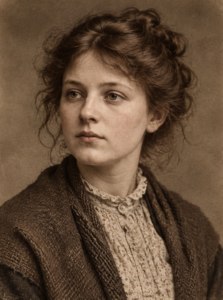 Alice Chard, aged 23, had attempted to take her own life by swallowing carbolic oil. When she appeared before the West London Police Court, the circumstances behind her distress emerged: she had married an omnibus driver believing him to be a bachelor, only to discover that he was a widower with a large family. He had since died, leaving her in difficult circumstances.
Her husband, Henry Albert Chard was born in 1852. By 1891, he was living at 10 Bayonne Road, Fulham, and working as an omnibus coachman. The census records him with his wife, Jane Sarah Mayes, whom he had married in Kensington in 1877, and five children: William Albert, Henry Alfred, Walter John,
Flora Bertha and Laura Maud.
Further research has identified three more children from Henry and Jane’s marriage: Arthur Ernest, born in 1891; May Elizabeth, born in 1893, who died in 1894; and Horace Edwin, born in 1895. The records so far establish at least eight births to Henry and Jane, although the number of children alive at any particular date needs to be distinguished from the number born.
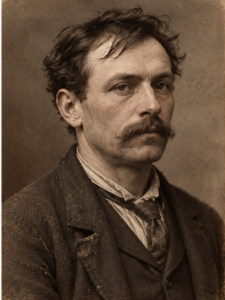 Henry’s wife, Jane Sarah Chard died in Fulham in Q1 1897, aged 40. Henry was left a widower with a number of dependent children. Later that year, he married Alice Beatrice Terry in Fulham.
On 2 March 1899 their son, Edward Albert Chard, was born and baptised on 9 April at St Andrew’s, Fulham.
Henry died in Q2 1899, aged 46.
The newspaper reports of the court case provide our most vivid glimpse of Alice’s circumstances. They do not, however, tell us exactly what support Alice had received from Henry, what she knew about his first family before their marriage, or whether she had relatives who could help her.
The Shepton Mallet Journal of 1 September 1899 (above) reported that Alice had been remanded, whilst a report in the Fulham and Hammersmith Chronicle, also dated 1 September, says she was subsequently discharged after promising not to repeat the act.
The reports differ over the size of Henry’s family. One says he had fourteen children; another says seven. Alice reportedly interjected, “The others are dead.” This is an important clue, but it does not settle the total number of children born to Henry, nor does it tell us exactly which children had died.
The Worcestershire Advertiser of 2 September 1899 offered a more sympathetic account. It described Alice as a young widow left with fourteen children and reported that a gentleman signing himself “R.P.” sent her £1. She was also offered a “situation” — in this context, most likely employment in domestic service.
That small detail is revealing. The proposed remedy for Alice’s hardship was not a continuing income or a modern form of social security, but a job. Domestic service offered many working-class women a way to earn a living, sometimes with accommodation included. But a young woman who had recently given birth, lost her husband and then her infant son would have faced considerable practical and emotional difficulties in securing and keeping employment.
The newspaper also reported that her landlady had retained Alice’s clothes over unpaid rent. Without her clothes, Alice could not readily return to domestic service. This illustrates how poverty could become a trap: a woman needed suitable clothing to obtain work, but needed money to recover her clothing, and needed work to obtain money.
The newspapers do not tell us everything; they give a compressed account of Alice’s life, shaped by the conventions of court reporting and the public interest in a distressing story. Nevertheless, the reports are consistent in portraying a young woman who had become desperately vulnerable.
Alice’s predicament becomes easier to understand when placed in the context of late Victorian society. The Victorian Poor Law system was designed not simply to relieve hardship but also to distinguish between people considered deserving of assistance and those thought responsible for their own poverty. Under the system established by the Poor Law Amendment Act of 1834, relief for able-bodied people was deliberately restrictive in many areas, with the workhouse intended to be less attractive than earning a living. Although attitudes gradually changed during the century, stigma attached to seeking public assistance remained powerful.
This did not mean that all Victorians were indifferent to suffering. Churches, charities, philanthropists and social reformers provided assistance, and the newspaper report about the £1 donation shows that private generosity could make a difference. But help was often discretionary and temporary, depending on the willingness of an individual benefactor or charitable organisation to intervene.
Alice’s case captures that contrast. She attracted sympathy and received an offer of employment and a small donation, yet the assistance described in the reports did not amount to a secure means of supporting herself.
A married working-class woman might contribute to the household through paid work, but marriage and motherhood could make continuous employment difficult. Domestic service was a major source of work for women, but it required employers to regard an applicant as suitable and dependable. A woman without suitable clothes, a settled address or references could struggle to obtain a position.
Widowhood could be especially precarious when the husband was the main wage earner. There was no universal state pension for widows and no modern welfare safety net. Some women could rely on parents, siblings, neighbours, churches or charitable organisations; others faced the workhouse or the difficult process of trying to support themselves.
The newspapers suggest that she had little money and was struggling to recover her clothes from her landlady. We cannot know whether she had other relatives willing or able to assist her.
An attempted suicide could bring a person before the courts, since suicide and attempted suicide were treated within the criminal law framework of the period. Alice’s appearance before the magistrates therefore placed her private distress into a public setting. The report that she was discharged after promising not to repeat the act suggests a relatively sympathetic outcome in this instance.
The newspaper’s presentation of Alice as a young widow in distress also invited readers to feel sympathy. Her circumstances were framed as a misfortune, rather than simply as evidence of wrongdoing. The donation and offer of a job suggest that at least some readers responded with practical assistance. We should not, however, assume that the public response was universally compassionate. Victorian attitudes combined charity and pity with anxieties about dependence, respectability and personal responsibility. Alice’s story fell into a category that could evoke sympathy: a young woman apparently abandoned by circumstances, rather than someone portrayed as deliberately avoiding work.
What happened after the court case?
The most significant event was the death of Alice’s son Edward, in Q4 1899. Thus, within a short period, Alice had lost both her husband and her infant son.
But, one of the most poignant parts of the case is what happened to the Chard children after the deaths of both their parents. By 1901, the children were no longer living together as one family. Census records show that several had entered institutional care or training establishments. This was not unusual for children whose families could no longer support them, although each child’s precise route into care remains to be established.
Flora — recorded as Florence — was at Kensington Training School for Girls, where she was listed as a “laundry maid”. The establishment was associated with training girls for work and domestic service. This suggests that she was being prepared for employment, although the census alone does not tell us how she came to be admitted or how she felt about her circumstances. Laura, aged about 12, was recorded at the same Kensington institution, under the designation “scholar.” Her presence there suggests that she was receiving education or training rather than living independently. The institution’s emphasis on preparation for respectable employment reflects the Victorian belief that training in domestic skills could help poor girls achieve self-support.
Arthur Ernest and Horace Edwin were at the West London Poor Law Schools at Ashford, near Staines in Middlesex. These were institutional schools for children under Poor Law care. Such establishments provided accommodation and schooling, with an emphasis on discipline and preparation for adult working life. Their presence there is strong evidence that the family could no longer maintain them in an ordinary household.
It is important not to assume that every institution was identical, or that every child experienced it in the same way. Some institutions offered schooling, food, accommodation and vocational training that children might not otherwise have received. Others imposed strict discipline and separated children from family life, sometimes for long periods.
Historians have shown that Poor Law authorities often saw institutions as a means of preventing children from growing up in poverty and becoming dependent on public relief. The system aimed to turn them into industrious, self-supporting adults, but it could also reduce parental control and make family reunification difficult.
The children were not necessarily placed in care because they were orphaned in the strict sense. It is possible that the children entered care because there was no relative able to support them, because Alice could not do so, or because other circumstances intervened. We do not yet have the admission records that would explain the decisions.
As for the older boys, William Albert, Henry Alfred and Walter John, they were lodging in different places elsewhere, probably as apprentices.
Who was Alice Chard?
No birth record could be found for an Alice Beatrice Terry, nor a subsequent marriage or death – or even a census entry – for an Alice Beatrice Chard. However, our research has uncovered a possible lead, but not a confirmed answer.
An Alice Beatrice Thair was born in July 1876 in Hackney. In the 1891 census (aged 15) she is living with her parents, George and Mary Ann Thair in Hackney, and she is also with them in the 1901 census (aged 25). Alice Thair died in January 1902 aged 25. Her age is therefore compatible with the age reported for Alice Chard in 1899. So if this is her, then she returned to her own family and died shortly thereafter.
The difficulty, clearly, is the surname, but it is possible that Alice’s maiden surname, recorded in documents as Terry, was a mis-hearing of Thair. Henry and Alice’s 1897 marriage certificate is therefore the most important outstanding document. It should provide Alice’s age, residence, marital status, father’s name and occupation. Those details may enable us to confirm or reject the Thair theory and identify Alice’s family before her marriage.
There is another unanswered question, however: the newspaper says Alice was induced to marry Henry believing him to be a bachelor. Did Henry deliberately mislead her, or did she misunderstand his circumstances? The phrase suggests that she was persuaded into the marriage, but it does not establish precisely what was said between them. Until we have more evidence, we must leave that question open.
CONCLUSION
The Chard family’s history illustrates how quickly a working-class household could become vulnerable to death, poverty and institutional intervention. Henry’s first marriage produced a large family, and after his first wife died in 1897, he married Alice later the same year. Henry and his infant son Edward both died in 1899. Within only a few years, the family had lost several members and the surviving children were scattered between different households and institutions.
For Alice, the combination of widowhood, bereavement, unpaid rent and difficulty finding work seems to have created a crisis from which she struggled to recover. The newspapers offer glimpses of both the harshness of her situation and the kindness of strangers. Yet the help reported was limited: a small donation, an offer of employment and a promise to the magistrates.
For the children, institutional care may have offered security, education and a route into employment, but it also meant separation from siblings and the loss of an ordinary family home. Their experiences remind us that Victorian welfare was not simply a story of neglect or cruelty, nor simply one of benevolence. It combined genuine charitable concern with strong expectations of discipline, self-reliance and respectable behaviour.
THE SUMMARY IMAGE